Company News

How to Choose the Right Brass Washers

Choosing the right Brass Washers starts with the job they must do. A washer that looks suitable on a workbench may still be too thin, too soft, or too wide for the assembly. Match its inner diameter to the fastener, then check the outer diameter and thickness against the load and available space. Small measurements matter.

A useful shop-floor principle, voiced here by composite fastener specialist Daniel Mercer, is: “Choose the washer for the load, the environment, and the mating surfaces—not appearance alone.” This is an illustrative quote, not a verified quotation from a named industry source. In practice, consider the brass alloy, temper, finish, and exposure to moisture, chemicals, or changing temperatures. Brass offers useful corrosion resistance and electrical properties, but it is softer than many steel fasteners. Excessive tightening can deform a washer or mark a finished surface.

Look closely at the application. A broad washer can spread pressure over a panel; a thin washer may fit a tight assembly but provide less support. Check whether the parts contact other metals, and review the manufacturer’s specifications before ordering. When dimensions are close, test a sample under realistic conditions. That extra check can prevent rework.

There is no universal best choice. A decorative fixture, electrical connection, and lightly loaded mechanical joint may each need different Brass Washers. Compare the drawing with the actual parts, and question assumptions that have gone untested. A careful selection is often quiet, almost invisible. That is the point.
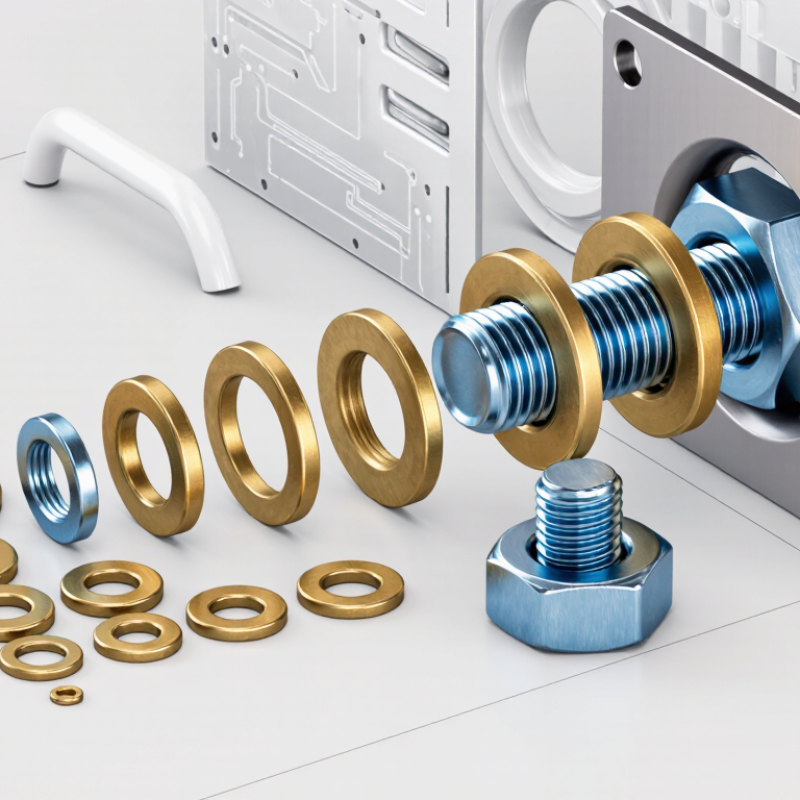
How to Choose the Right Brass Washers

Identify the Washer’s Function and Joint Requirements

Before choosing a brass washer, identify what the joint needs it to do. A washer may spread pressure, protect a softer surface, provide a spacer, or help maintain electrical contact. These jobs are not interchangeable. A broad washer can distribute a bolt’s load across a larger area, while a thin spacer controls alignment between parts. Check the actual joint, not just the bolt size. A washer that fits the fastener may still have an unsuitable outside diameter or thickness.

Look at the materials and conditions around the joint. Brass is relatively soft, so a washer may deform under high clamping loads; verify that it suits the required load and tightening specification. For example, a small washer beneath a bolt head on a painted panel may leave a narrow pressure mark, while a wider one spreads contact. Check for vibration, moisture, temperature changes, and whether electrical conductivity matters. Also inspect the mating surfaces for burrs or uneven spots. Small details matter. One easy mistake is choosing by appearance alone. I’d be cautious about assuming a thicker washer is automatically stronger; it can change the joint’s spacing and available thread engagement. Use the drawing or equipment requirements where available, and confirm the finished joint sits flat before tightening.
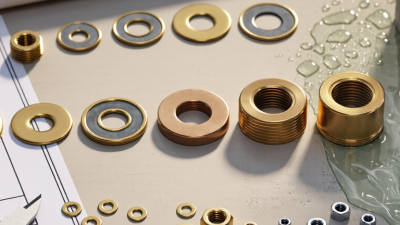
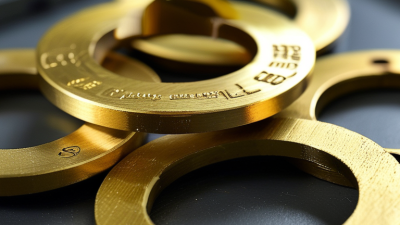
Compare Brass Grades and Their Key Properties

How to Choose the Right Brass Washers
Compare Brass Grades and Their Key Properties

Brass washers are not all made from the same alloy. C260, often called cartridge brass, contains roughly 70% copper and 30% zinc. It bends and forms well, making it useful for washers that need a little flexibility. It also resists corrosion in many indoor and mildly damp settings. That matters. For a washer clamped under steady pressure, though, brass may deform more than steel over time.

C360 is designed for easier machining, so it can suit washers made to precise dimensions. Its lead content depends on the applicable material specification, so check the certificate when exposure or end use makes composition important. C464, or naval brass, includes tin to improve resistance in marine environments. It can be a sensible option near salt spray, but no brass grade is immune to corrosion or poor installation.

Compare the alloy designation, not just the word “brass.” Then consider the washer’s thickness, load, moisture, and contact materials. A thin washer may flatten under a heavy bolt even when its alloy is appropriate. I’d also test a sample in the actual assembly; charts do not capture every surface finish or tightening habit. A small trial can reveal a mismatch before production.

Select the Correct Inner, Outer, and Thickness Dimensions

How to Choose the Right Brass Washers

Select the Correct Inner, Outer, and Thickness Dimensions

Start with the inner diameter (ID): it must slide over the bolt or screw without binding, but should not leave excessive play. Measure the fastener’s shank and check the hole, especially if parts may shift under vibration. A close fit matters. For a common reference, ISO 7089:2000 lists a normal-series M6 washer at 6.4 mm ID, 12 mm outer diameter (OD), and 1.6 mm thickness. This is dimensional guidance, not a brass-specific specification; confirm the washer’s material and applicable product standard before ordering.

Choose the OD to spread force across the surface without covering nearby features. On a soft panel, a larger OD can reduce pressure and help prevent dents. Then check thickness against available clearance and the required stack height. A thicker washer may feel sturdier, yet it can reduce usable thread engagement. Measure the installed gap with calipers, and inspect whether the washer sits flat against both parts. Brass grades and manufacturing tolerances can vary, so listed dimensions may not match every batch exactly. I would recheck a sample part before placing a large order. Small mismatch, real headache.

Assess Load, Temperature, and Corrosion Conditions

How to Choose the Right Brass Washers

Assess Load, Temperature, and Corrosion Conditions

Start with the force the washer must spread. A small washer under a narrow bolt head can dish or embed in a softer surface. Check the joint’s load, washer thickness, outside diameter, and the material it bears against. Brass grades and tempers vary, so do not assume every washer has the same strength. For a vibrating or heavily loaded joint, confirm the washer suits the assembly rather than relying on appearance. Fit matters.

Temperature changes the choice. Brass expands with heat, and its strength can fall at elevated temperatures. Consider the full operating range, including brief heat spikes near engines, heaters, or process equipment. A washer that fits neatly at room temperature may loosen or deform after repeated heating and cooling. Check the material data for the specific brass grade. I would not guess here.

Corrosion depends on the surrounding materials and fluids. Moist indoor air is different from salt spray, cleaning chemicals, or water that can encourage dezincification in some brasses. Look for discoloration, pitting, or pinkish patches during inspections; these can signal deterioration, though appearance alone is not a diagnosis. Also check for contact with dissimilar metals and moisture trapped beneath the washer. A dry, clean interface helps, but it is not a substitute for choosing a compatible alloy.

Check Standards, Finish, and Manufacturing Quality

When comparing brass washers, start with the drawing and working conditions, not a catalog photo. Specify the inside diameter, outside diameter, thickness, and acceptable tolerances. For critical assemblies, identify the applicable material or dimensional standard in the purchase specification; requirements can vary by product and region. Request documentation showing the alloy and material condition.

Small details matter.

Choose a finish for the actual environment. Bare brass can tarnish, especially with moisture or salt exposure, while a coating may affect dimensions, friction, or electrical contact. State whether the washer needs to remain conductive or simply resist discoloration.

Looks can mislead.

A bright surface does not prove that the coating is even or durable. If appearance is important, inspect a sample after handling and exposure to the expected conditions.

Manufacturing quality shows at the edges and across a batch. Check for burrs, sharp stamped edges, uneven thickness, and holes that sit off-center.

Check the edges.

Ask how the supplier controls dimensions and verifies finished parts, then review inspection records when the application is demanding. A small sample can reveal problems before a large order arrives. I would not assume every washer in a batch matches the best-looking sample; consistency deserves its own check.