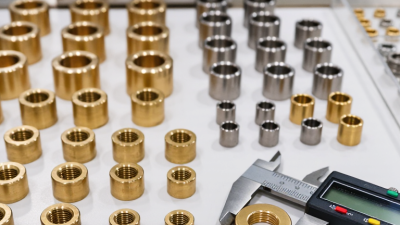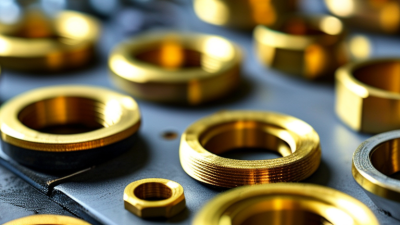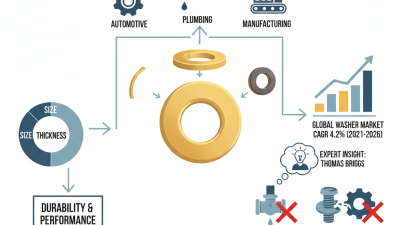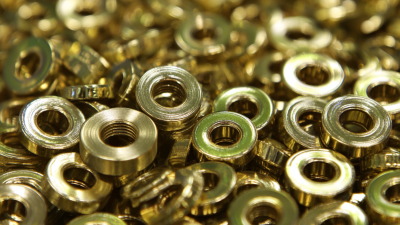
Choosing the right Brass Washers can quietly determine whether a fastening system remains stable, clean, and serviceable. Global buyers often compare price first, yet washer geometry, alloy grade, hardness, and surface condition deserve equal attention. A thin washer may suit a light electrical assembly, while a thick, precision-machined washer may better support a structural joint. The difference can be only a few millimeters, but the performance gap may be substantial.
Dr. John Bickford, a widely recognized fastening engineer, stated, “A bolted joint is a system, not merely a bolt.” This principle also applies to washers. Brass Washers can improve electrical contact, resist moderate corrosion, and protect softer surfaces from fastening damage. However, brass is not automatically the best choice. Its strength, conductivity, machinability, and compatibility with nearby metals must be checked together.
This guide examines ten common Brass Washer types for international purchasing teams. It considers flat washers, shoulder washers, lock washers, sealing washers, and specialized designs. Each type is connected to a practical buying question: Where will it be installed? What load will it carry? Is insulation required? Will moisture, heat, vibration, or galvanic corrosion affect the joint?
No ranking is perfect. That matters.
Manufacturing tolerances can vary between suppliers, even when product names appear identical. Packaging quality may also influence delivery results, especially during long-distance transport. Buyers should confirm drawings, standards, material certificates, plating details, and inspection methods before placing large orders. The aim is not to select the most expensive washer. It is to select the most suitable one, with evidence supporting that decision.
Brass Washer Classification: 10 Types by Geometry, Load, and Application
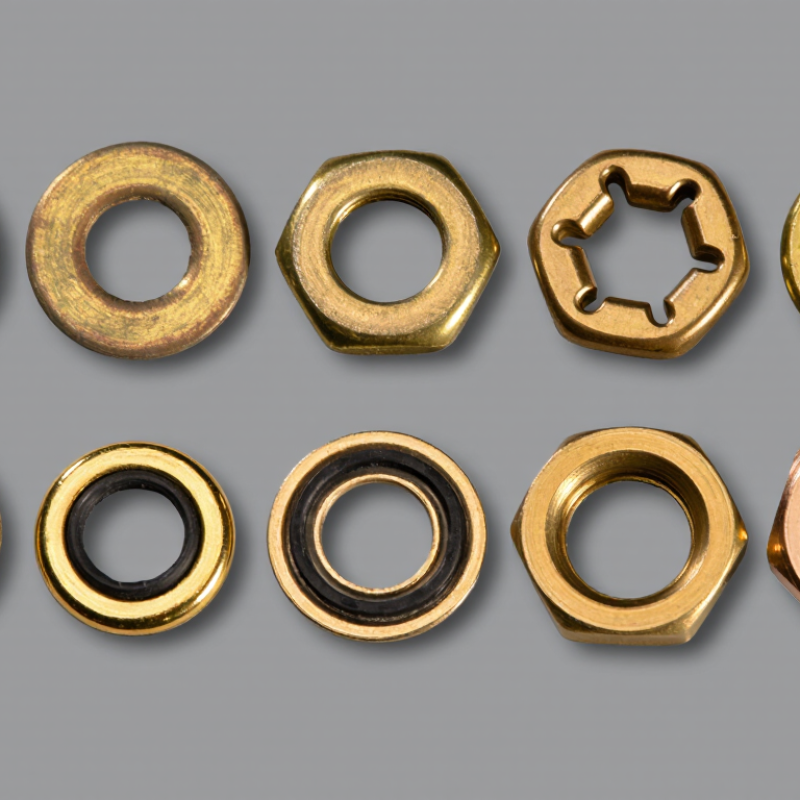
Brass washers are not interchangeable. Their geometry controls pressure distribution, alignment, insulation, and movement. Ten practical types cover most purchasing needs. Flat washers spread bolt load across panels and machine surfaces. Fender washers use a wider outside diameter for thin sheet metal. Shoulder washers isolate fasteners and guide shafts. Sealing washers combine a brass body with a compressible insert. Countersunk washers sit neatly beneath angled screw heads.
Spring washers provide light preload, although their locking performance can be overstated. Wave washers create controlled axial tension in compact assemblies. Toothed washers bite into surfaces and resist rotation. Tab washers use a bent tab for mechanical retention. Spherical washers correct minor angular misalignment between a bolt head and the joint. Geometry matters, but the joint’s actual load matters more. A neat catalog cannot replace torque checks and contact inspection.
Tips: Confirm inner diameter, outer diameter, thickness, hardness, and surface condition. Check whether the washer carries compression, vibration, alignment, or sealing duties. Brass may mark softer materials under high torque. I have seen oversized washers deform thin panels, despite appearing safer. Ask for dimensional reports and material certificates when tolerances are tight. A small drawing often prevents an expensive mismatch.
| No. | Washer Type | Geometry and Structure | Primary Load or Function | Typical Applications | Key Selection Considerations | Common Standard or Reference |
|---|---|---|---|---|---|---|
| 1 | Standard Flat Washer | Flat annular disc with a central round hole; outside diameter is normally larger than the bolt diameter. | Distributes clamp load, protects the joint surface, and reduces embedment under the nut or bolt head. | General bolted joints, electrical hardware, plumbing assemblies, cabinets, instruments, and light machinery. | Match the inside diameter to the fastener and select an outside diameter and thickness suitable for the bearing surface and joint load. | ASME B18.21.1; ISO 7089; DIN 125 |
| 2 | Fender Washer | Flat washer with an unusually large outside diameter compared with its inside diameter; usually relatively thin. | Spreads load over a broad area and reduces pull-through or surface damage in thin materials. | Sheet metal, wood, plastics, fiberglass panels, roofing assemblies, vehicle trim, and enclosure mounting. | Use when the parent material is soft, thin, or has an oversized mounting slot; verify clearance around the washer. | ASME B18.21.1; DIN 9021 |
| 3 | Square Washer | Flat washer with a square outside profile and a round or square central hole. | Provides a large bearing area and resists rotation against a flat edge or channel. | Timber connections, structural channels, foundation hardware, brackets, and slotted metal assemblies. | Check corner clearance, hole shape, material thickness, and whether the square profile can seat fully on the joint surface. | ASME B18.21.1; DIN 436; DIN 434 |
| 4 | Countersunk Finishing Washer | Washer with a countersunk or conical seat that accepts a flat-head screw and produces a flush or semi-flush finish. | Distributes load while supporting a countersunk screw head and improving the appearance of the joint. | Decorative hardware, marine fittings, furniture, instrument panels, doors, and visible architectural assemblies. | Match the countersink angle and screw head diameter; confirm that the washer will not cut into the mating surface. | Product geometry should be specified by countersink angle, inner diameter, and outer diameter. |
| 5 | Shoulder Washer | Insulating washer with an integral cylindrical shoulder that projects into or through a mounting hole. | Provides electrical isolation, centers a component, and prevents contact between a fastener and the surrounding structure. | Terminal blocks, printed-circuit assemblies, sensors, motors, transformers, and metal-to-plastic mounting points. | Specify shoulder length, shoulder outside diameter, flange diameter, and dielectric or temperature requirements. | Commonly designed to the component drawing; polymer or fiber versions are often used where electrical insulation is required. |
| 6 | Internal-Tooth Lock Washer | Washer with teeth projecting inward from the inner circumference; teeth bite into the fastener underside and bearing surface. | Helps resist loosening caused by vibration through mechanical tooth engagement. | Electrical panels, small appliances, control equipment, low-profile machine assemblies, and terminals. | The teeth need suitable surface engagement; avoid relying on it as a substitute for correct tightening torque or a designed locking system. | DIN 6797 Type I; ASME B18.21.1 lock-washer series |
| 7 | External-Tooth Lock Washer | Washer with teeth projecting outward from the outer circumference; the teeth engage the bearing surface. | Provides mechanical resistance to rotation and increases surface bite around the fastener head or nut. | Grounding points, switchgear, brackets, panels, chassis assemblies, and joints with a broad bearing surface. | Allow room for the outside teeth and use only where tooth marks or surface penetration are acceptable. | DIN 6797 Type A; ASME B18.21.1 lock-washer series |
| 8 | Tab or Tab-Lock Washer | Flat washer with one or more tabs, lugs, or ears that fold against a nut, bolt head, or mating component. | Provides positive mechanical locking after installation by physically preventing fastener rotation. | Gear assemblies, shafts, bearing retainers, machinery, automotive mechanisms, and serviceable joints. | Provide a suitable tab stop and enough clearance for bending; the washer must be replaced if the tab is damaged during service. | Design-specific; dimensions are commonly controlled by the assembly drawing or industry application standard. |
| 9 | Wave Washer | Thin annular washer formed with one or more continuous waves around its circumference. | Applies light axial spring force, compensates for tolerance stack-up, and reduces axial rattle. | Bearings, knobs, switches, small gear mechanisms, electrical equipment, and compact axial-preload assemblies. | Select by working deflection, spring force, free height, operating temperature, and available axial space. | Spring-washer dimensions are commonly specified by spring-load requirements and supplier or drawing data. |
| 10 | Conical Disc Spring Washer | Conical annular disc, also known as a Belleville-type washer, that flattens elastically under axial compression. | Generates controlled axial spring force, compensates for thermal expansion, and maintains preload in changing conditions. | Valve assemblies, thermal equipment, flanged joints, precision machinery, and high-preload fastening systems. | Specify outside diameter, inside diameter, free height, thickness, working deflection, and required spring force; stacking direction changes performance. | DIN 2093; DIN 6796 |