Company News

China Top 10 Acme Threaded Rod Types for Buyers?

Buying the right Acme Threaded Rod requires more than comparing diameter, length, and price. Buyers must examine thread form, lead, material, hardness, coating, and expected load. A rod turning smoothly on a clean test bench may still fail in a dusty lifting mechanism. Small details matter.

Dr. John H. Bickford, a recognized fastening engineer and author, offers a useful warning: “A fastener is only as good as the joint it serves.” This principle applies directly to Acme Threaded Rod selection. A stainless-steel rod may resist corrosion, yet it may not provide the wear resistance required for repeated industrial motion. An alloy-steel option may carry higher loads, but lubrication and alignment remain essential.

This guide reviews ten Acme Threaded Rod types for serious buyers. It considers single-start and multi-start designs, right-hand and left-hand threads, stainless steel, carbon steel, alloy steel, bronze, coated rods, precision-ground rods, and custom configurations. Each type serves a different working condition. Some favor strength. Others favor speed, corrosion resistance, or easier maintenance.

No ranking is perfect. Buyer priorities change.

The comparison focuses on practical purchasing questions: What load will the rod carry? How often will it cycle? Will moisture, dust, heat, or chemicals affect performance? Are the nut and rod properly matched? These questions expose weak specifications before purchase. The goal is not to promote one universal product. It is to help buyers choose a dependable Acme Threaded Rod for the actual machine, environment, and service life.
China Top 10 Acme Threaded Rod Types for Buyers?

Acme Threaded Rod Classification: The Ten Main Types from China

China Top 10 Acme Threaded Rod Types for Buyers

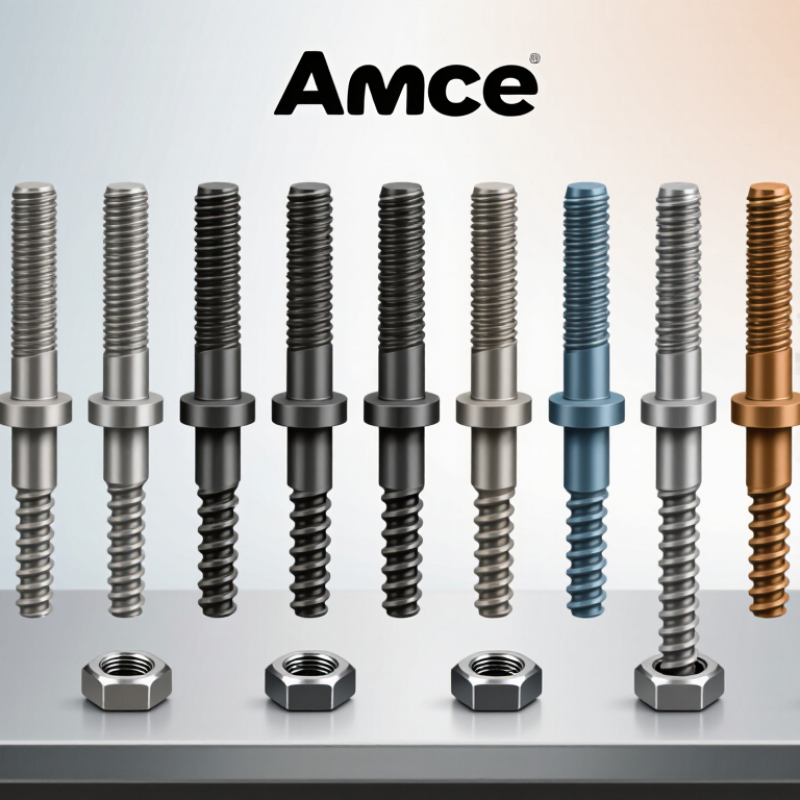
Chinese suppliers usually classify Acme threaded rods by profile, lead, production method, and material. This market classification helps buyers compare practical options. The ten common types are standard Acme, stub Acme, centralizing Acme, single-start, multi-start, right-hand, left-hand, rolled-thread, ground-thread, and stainless-steel Acme rods. Standard Acme rods suit general linear movement. Stub Acme rods use shorter thread depths for limited space. Centralizing designs reduce side movement in demanding applications. Single-start rods offer controlled travel. Multi-start rods move faster per revolution.

Rolled-thread rods are economical and usually provide consistent production quality. Ground-thread rods offer better accuracy, but they cost more. Right-hand threads remain the normal choice. Left-hand threads help prevent loosening or coordinate opposing motion. Stainless-steel types resist moisture and some corrosive environments.

Carbon and alloy steel are also widely used, with surface treatments selected for wear resistance. In my purchasing experience, drawings often reveal more than product names. A rod can look suitable yet fail because its pitch, tolerance, or end machining is wrong. That detail is easy to underestimate.

Tips:

Confirm the nominal diameter, thread angle, pitch, lead, length, material, hardness, and tolerance. Request inspection records and a sample when accuracy matters. Check whether the nut matches the rod. Do not assume a standard size fits every machine. Ask about straightness, surface finish, and packaging protection. Some suppliers describe metric trapezoidal threads as Acme threads, which may create confusion. Review the technical drawing carefully.
Key Specifications Buyers Should Compare Across Acme Rod Types

China Top 10 Acme Threaded Rod Types for Buyers?

When comparing Acme rod types, start with diameter, lead, pitch, and thread angle. These dimensions control load capacity, travel speed, and compatibility. Common options include general-purpose, precision, stainless steel, alloy steel, coated, left-hand, right-hand, multi-start, anti-backlash, and custom-machined rods. A larger diameter often handles greater loads, but it also increases weight and drive torque. Multi-start threads move faster, though they may reduce mechanical advantage. Check the actual lead, not only the advertised pitch.

Material selection should match the working environment. Stainless steel resists moisture, while alloy steel usually offers higher strength and wear resistance. Compare hardness, straightness, surface finish, tolerance grade, and maximum unsupported length. For vertical lifting, review the buckling load and safety factor carefully. For positioning equipment, backlash and repeatability matter more than simple tensile strength. End machining also deserves attention. A poorly aligned journal can create vibration, even when the thread looks perfect. I have seen buyers focus on price and overlook this detail.

Tips: Request a dimensional inspection report, thread gauge results, and a sample rod before bulk purchasing. Confirm lubrication requirements and operating temperature. Ask whether the stated load is static or dynamic. One overlooked point is nut compatibility; the rod and nut should be tested as a matched pair. Specification sheets can still be incomplete, so verify critical measurements independently.

China Top 10 Acme Threaded Rod Types for Buyers

Key specifications buyers should compare across Acme rod types: nominal diameter, threads per inch, and single-start lead. The lead values are calculated as 25.4 ÷ TPI.

Larger diameters generally support higher load capacity, while coarser pitches provide greater lead per revolution. Final selection should also verify material, tensile strength, thread class, straightness, surface finish, and required load or speed.

Materials, Coatings, and Manufacturing Standards Explained

China Top 10 Acme Threaded Rod Types for Buyers?

Materials, coatings, and standards determine whether an Acme threaded rod performs reliably. Carbon steel suits general machinery and moderate loads. Alloy steel offers higher strength after controlled heat treatment. Stainless steel resists moisture, but it can gall during assembly. Choose the material from the working load, temperature, and surrounding environment. Do not select stainless steel automatically.

Coatings protect the rod, but each option has limits. Zinc plating helps resist indoor humidity and light corrosion. Black oxide provides a neat appearance, yet it needs additional oil protection. Hot-dip galvanizing offers stronger outdoor protection, although its thicker coating may affect thread fit. PTFE-based coatings reduce friction in some applications. Always confirm coating thickness and thread allowance before production. A bright surface proves very little.

Manufacturers should identify the thread profile clearly. Inch Acme threads commonly follow ASME B1.5, while Stub Acme threads use ASME B1.8. Metric trapezoidal threads should match the relevant ISO dimensional standards. Buyers should request material certificates, heat-treatment records, hardness results, and coating inspection data. Check pitch diameter with calibrated gauges. Measure straightness on a surface table, not by eye. A receiving inspection can reveal damaged crests, uneven plating, or poor end chamfers. One detail is often missed: packaging. Without separators, rods may rub together and lose their protective coating. Even experienced buyers sometimes trust drawings too quickly. Confirm the actual sample against the approved specification.

How to Match Each Rod Type with Its Intended Application

China Top 10 Acme Threaded Rod Types for Buyers

Choosing an Acme rod starts with motion, load, and environment. ASME B1.5 defines Acme thread geometry, but application testing still matters. The 2024 World Robotics report recorded 541,302 industrial robot installations in 2023. This growth increases demand for controlled linear movement, not simply cheap threaded stock.

For lifting tables and machine slides, choose a general-purpose single-start rod. Stub Acme suits shallow sections and limited material thickness. Centralizing Acme works better when alignment must remain stable. Multiple-start rods deliver faster travel per revolution. Precision-ground rods fit inspection equipment and low-backlash positioning. Rolled rods suit economical automation and repeated motion. Right-hand rods match standard drive systems. Left-hand rods help prevent self-loosening in rotating assemblies. Stainless rods resist moisture in washdown areas. Carbon-steel rods remain practical for dry, high-load fixtures. These are ten useful buyer categories, although the boundaries can overlap.

Tips: Check the load direction, travel speed, duty cycle, and nut material together. A fast-start rod may reduce motor time, but it can lose mechanical advantage. Measure backlash under real temperature conditions. ISO 3408 test methods can guide ball-screw verification, but Acme systems need application-specific checks. The U.S. Department of Energy reports that motor-driven systems use about 69% of industrial electricity. Better screw selection can reduce wasted motion, yet this claim should be verified through measured cycle data. One overlooked detail: dust can turn a smooth slide into a gritty, noisy mechanism.

China Top 10 Acme Threaded Rod Types for Buyers: How to Match Each Rod Type with Its Intended Application

No. Acme Rod Type or Configuration Key Technical Characteristics Common Material and Finish Options Best-Fit Applications Buyer Matching Considerations
1 General-Purpose Single-Start Acme Rod Uses the standard 29-degree included-angle Acme thread profile. A single-start design provides a relatively high mechanical advantage and controlled linear movement. Carbon steel Alloy steel Black oxide Zinc plated Machine-tool slides, clamps, vises, positioning fixtures, linear actuators, and general industrial adjustment mechanisms. Choose this type for moderate-speed movement, high holding ability, and broad compatibility with standard Acme nuts. Confirm nominal diameter, pitch, tolerance class, and nut material.
2 Stub Acme Rod Has a shallower Acme thread form than standard Acme. The reduced thread depth can provide a larger core diameter and greater resistance to bending for a given nominal size. Carbon steel Alloy steel Stainless steel Heavy-duty power transmission, short engagement lengths, large-diameter screws, compact mechanisms, and applications exposed to high bending loads. Use only with a matching Stub Acme nut. Do not interchange Stub Acme and standard Acme components without verifying the thread standard and dimensions.
3 Centralizing Acme Rod A centralizing Acme form is designed to improve screw-and-nut alignment and provide controlled clearance around the thread crest area. Carbon steel Alloy steel Ground or rolled surface Long leadscrews, machine-tool feed systems, mechanisms where alignment may vary, and applications requiring smoother engagement than a conventional clearance arrangement. Match the rod to a centralizing Acme nut and check the required tolerance class. It is more suitable when alignment control is important than for basic low-cost fastening.
4 Multi-Start Acme Rod Contains two or more thread starts. Its lead is greater than its pitch, allowing more linear travel per revolution while reducing mechanical advantage compared with a single-start rod. Carbon steel Alloy steel Ground or rolled Rapid linear actuators, automated positioning equipment, opening and closing mechanisms, packaging machinery, and lifting systems requiring faster travel. Specify the number of starts and lead, not only the pitch. Check self-locking requirements because a larger lead can increase the possibility of back-driving.
5 Right-Hand Acme Rod Advances in the conventional direction when rotated clockwise as viewed from the designated reference end. It is the most commonly selected hand direction. Carbon steel Stainless steel Alloy steel Standard linear actuators, machine adjustments, clamps, jacks, slides, and replacement parts for conventional drive arrangements. Select when the mechanism has standard clockwise/counterclockwise motion. Verify the reference end and rotation direction in the assembly drawing before ordering.
6 Left-Hand Acme Rod Advances in the opposite direction from a right-hand rod when rotated from the same reference position. Left-hand threads can prevent loosening or coordinate opposing motion. Carbon steel Alloy steel Stainless steel Turnbuckles, paired actuators, opposing adjustment systems, rotating assemblies, and mechanisms where right-hand rotation could loosen the connection. Clearly specify left-hand thread direction, lead, and mating nut. Confirm rotation direction and installation orientation to avoid ordering a visually similar but incompatible rod.
7 Precision-Ground Acme Rod Manufactured by grinding the thread profile after heat treatment or from a prepared blank. It can provide tighter dimensional control, improved pitch accuracy, and better repeatability. Hardened alloy steel Stainless steel Precision-ground surface CNC machine axes, inspection equipment, precision slides, robotics, semiconductor equipment, and repeatable positioning systems. Prioritize lead accuracy, straightness, runout, surface finish, and preload requirements. A precision rod should be paired with a nut designed for the same accuracy class.
8 Rolled Acme Rod The thread is formed by cold rolling rather than cutting away material. Rolled threads commonly provide good surface finish, consistent production, and favorable fatigue performance. Carbon steel Alloy steel Zinc plated Black oxide High-volume actuators, material-handling equipment, adjustable supports, general automation, and cost-sensitive industrial assemblies. Select when production quantity, durability, and consistent thread quality matter more than the highest positioning accuracy. Check rolled-thread diameter limits and available lengths.
9 Stainless-Steel Acme Rod Provides improved resistance to atmospheric corrosion compared with uncoated carbon steel. Common stainless grades differ in strength, corrosion resistance, and galling tendency. AISI 303 AISI 304 AISI 316 Plain or passivated Food-processing equipment, laboratory equipment, outdoor mechanisms, washdown areas, marine-adjacent equipment, and clean manufacturing environments. Specify the stainless grade and operating environment. Use compatible nut materials and suitable lubrication because stainless-on-stainless contact can increase galling risk.
10 Hardened Alloy-Steel Acme Rod Uses heat-treated alloy steel for increased wear resistance, load capacity, and resistance to thread deformation under demanding operating conditions. Heat-treated alloy steel Induction hardened Black oxide Protective coating Heavy-duty lifting devices, industrial presses, high-cycle actuators, machine tools, and applications with high loads or frequent reciprocating movement. Check hardness, tensile strength, allowable load, wear life, straightness, and compatibility with the nut. The nut may need to be softer than the screw to reduce damage to the rod.

Buyer note: Acme thread geometry, dimensions, tolerances, and nut compatibility should be verified against the applicable drawing or standard. Standard Acme and Stub Acme components are not automatically interchangeable. For every order, confirm nominal diameter, pitch or lead, number of starts, hand direction, length, material, surface treatment, straightness, and required load or positioning accuracy.

Quality Checks, Customization Options, and Supplier Evaluation Criteria

China Top 10 Acme Threaded Rod Types for Buyers?

Quality checks should begin with the thread profile, not the packaging. Measure pitch, flank angle, major diameter, and lead with calibrated gauges. Inspect straightness on a surface table. A rod may look polished yet contain uneven threads or hidden bending. Check hardness, surface cracks, burrs, and corrosion protection. Request material certificates and batch inspection records. Traceability matters when rods support lifting, positioning, or heavy linear movement.

Customization can include diameter, length, pitch, thread direction, end machining, and protective coating. Specify the matching nut and working load together. Otherwise, a perfect rod may perform poorly in assembly. Common choices include carbon steel, alloy steel, stainless steel, and coated variants. Select based on load, speed, environment, and maintenance conditions. Keep drawings clear. A missing tolerance can create expensive rework.

Supplier evaluation needs evidence, not confident promises. Ask for samples, dimensional reports, process controls, and production lead times. Review their ability to maintain consistent thread geometry across batches. Communication quality is also practical evidence. Slow answers during sampling may become serious delays later. I have found that low prices can hide weak inspection systems. Still, certificates alone are not enough. An independent sample check can reveal what paperwork misses. Require clear acceptance criteria before placing a larger order.