Company News

China Top Stainless Steel Fasteners Manufacturers?

China’s stainless steel fastener industry combines large-scale production with increasingly demanding quality expectations. Stainless Steel Fasteners appear in bridges, chemical plants, solar frames, food equipment, and coastal construction. Each application needs more than a bright surface. It requires correct alloy selection, stable dimensions, controlled threads, and traceable testing.

The International Stainless Steel Forum reported approximately 58.4 million tonnes of global stainless steel production in 2023. That volume supports China’s broad raw-material and manufacturing ecosystem. Grand View Research identifies construction, automotive, and industrial equipment as major fastener market drivers. However, market size does not prove supplier reliability. A factory may show polished samples while hiding inconsistent hardness or mixed material batches.

Dr. John Bickford, a widely cited bolted-joint specialist, describes the basic principle clearly: “A bolt is a spring.” This insight matters when comparing China’s top Stainless Steel Fasteners manufacturers. Preload control, friction consistency, and tightening procedures can determine whether a joint remains secure under vibration. ISO 898-1, ISO 3506, ASTM F593, and ASTM F594 provide useful reference points, although buyers must confirm the applicable standard for each product.

A serious supplier should provide mill certificates, inspection records, salt-spray or corrosion data, and production samples. Factory audits should examine heat-treatment controls, thread gauges, packaging, and lot identification. Digital traceability is valuable, but paperwork alone is insufficient. I have seen supplier comparisons fail because buyers focused only on unit price. The cheaper quotation may conceal higher installation risks, rejected batches, or expensive field replacements.

This guide examines leading Chinese manufacturers through capability, certification, export experience, and practical quality evidence. Rankings can change. Verification remains essential.
China Top Stainless Steel Fasteners Manufacturers?

What Defines a Leading Stainless Steel Fastener Manufacturer in China?

What Defines a Leading Stainless Steel Fastener Manufacturer in China?

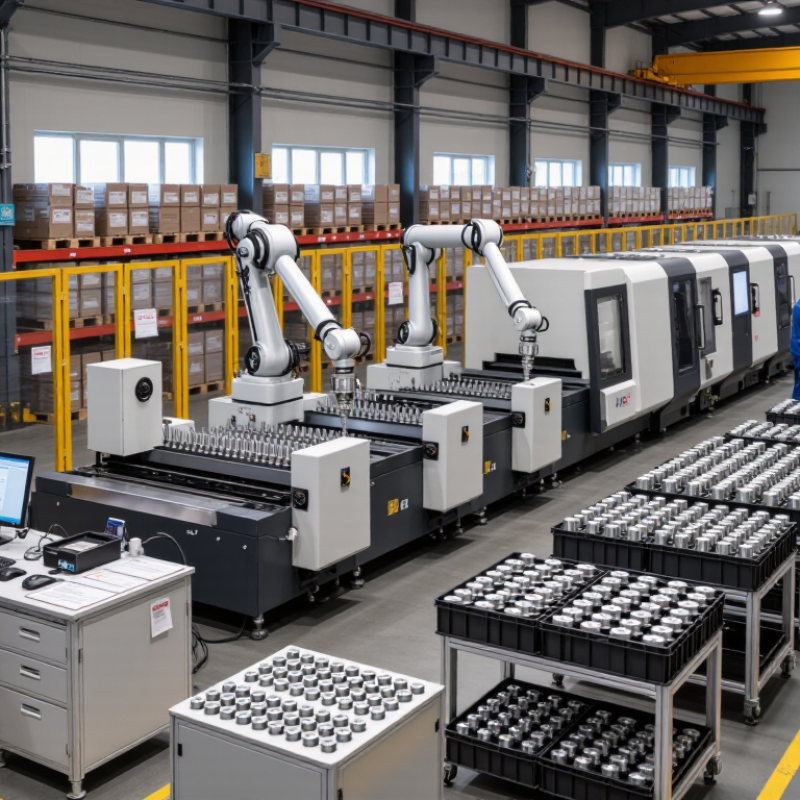
A leading Chinese stainless steel fastener manufacturer is defined by process control, not catalog size. MarketsandMarkets forecasts the global fasteners market to reach about USD 116.5 billion by 2028. This growth raises pressure on consistency, delivery, and technical support. Reliable manufacturers control wire selection, cold heading, thread rolling, heat treatment, and surface finishing. They also maintain documented inspection records. Small details matter.

A capable supplier should work with recognized standards, including ISO 3506 for stainless steel fasteners and ASTM specifications where required. Material certificates should identify the heat number and chemical composition. Test reports should cover dimensions, hardness, tensile strength, and corrosion performance. Independent laboratory verification adds confidence. It is not excessive.

The International Stainless Steel Forum reported global stainless steel production of approximately 58.4 million tonnes in 2023. That scale does not guarantee fastener quality. A manufacturer must still prevent mixed grades, damaged threads, and inconsistent passivation. Audit the production line, not only the showroom. Ask how rejected parts are isolated and traced. No factory is flawless. Even mature systems need review, especially after tooling changes or urgent orders. A dependable manufacturer also explains limitations honestly, rather than promising every specification without evidence.
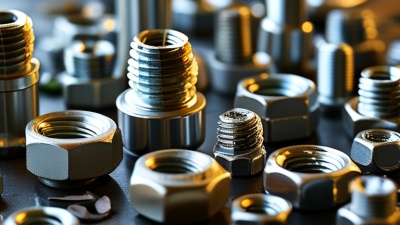
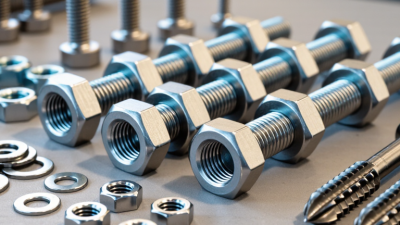
Key Stainless Steel Fastener Manufacturing Regions and Industrial Clusters

China’s stainless steel fastener industry is concentrated in several practical manufacturing regions. Jiangsu’s Dainan area is known for stainless steel processing and fastener production. Local factories commonly work with 304 and 316 grades. They support cold heading, thread rolling, machining, polishing, and passivation.

Zhejiang has strong clusters around Ningbo, Cixi, and Wenzhou. Ningbo and Cixi offer mature tooling, metal forming, and export logistics. Wenzhou suppliers often serve valves, pumps, construction hardware, and marine equipment. These clusters can produce bolts, nuts, washers, screws, and customized parts in small or medium batches.

Production experience matters here. Skilled operators can notice surface cracks before inspection records reveal them.

Guangdong, especially Foshan and Dongguan, connects stainless fasteners with furniture, appliances, electronics, and architectural hardware. Buyers can often find flexible machining and faster prototype support. Northern regions, including Hebei, also contain broad fastener networks, although stainless capability may vary between workshops. A cluster is not a guarantee. Buyers should verify material certificates, heat numbers, dimensional reports, and passivation procedures. Salt-spray performance also depends on design, cleaning, and installation, not only stainless grade. Some factories describe every polished part as corrosion resistant. That wording needs scrutiny. Visiting the production line remains useful, but even a visit cannot replace independent testing.

Major Product Categories and Material Grades

China’s stainless steel fastener sector covers many industrial requirements, from light assembly to marine exposure. Major product categories include hex bolts, socket screws, machine screws, nuts, flat washers, spring washers, threaded rods, and expansion anchors. Each category needs different dimensional controls. A poorly matched washer can damage a coated surface or reduce joint stability.

Grade selection should follow the service environment, not only the purchase price. Grade 304 is widely used for indoor equipment, food-processing areas, and general construction. Grade 316 and 316L provide better resistance to chlorides, making them more suitable near seawater or chemical handling zones. Grade 201 costs less, but its lower nickel content can reduce corrosion resistance. It should not be treated as a direct replacement for 304. That mistake still appears in basic sourcing requests.

Martensitic grades 410 and 420 offer higher hardness and useful wear resistance, though they usually resist corrosion less effectively than austenitic grades. Duplex 2205 combines strong mechanical performance with improved chloride resistance, but forming and machining require closer control. Reliable manufacturers should provide heat numbers, material certificates, dimensional inspection records, and batch traceability. Buyers should also verify thread tolerance, surface condition, tensile strength, and passivation practice. In my view, salt-spray results alone can mislead. Joint design, installation tools, contamination, and real exposure conditions matter just as much. Testing plans may need adjustment after field feedback.

Quality Standards, Certifications, and Testing Practices

China Top Stainless Steel Fasteners Manufacturers?

Quality Standards, Certifications, and Testing Practices

Reliable stainless steel fastener manufacturers work against clear product standards, not vague quality promises. Common references include ISO 3506, ASTM F593, ASTM F594, DIN, EN, and applicable GB standards. The correct standard depends on the fastener type, alloy, thread, and service environment. A manufacturer should provide material certificates with heat numbers, chemical composition, and mechanical results. EN 10204 3.1 documentation is often useful for traceability. Do not accept a certificate without checking its issuing laboratory.

Testing should happen at several stages. Incoming stainless steel can receive positive material identification through X-ray fluorescence testing. Finished bolts and nuts may undergo tensile, proof-load, hardness, dimensional, and thread-gauge checks. Torque testing matters when a joint requires controlled tightening. Corrosion testing can support a project, but salt-spray results do not perfectly represent every outdoor condition. Real exposure may involve moisture, chlorides, heat, and crevices. Details matter.

Certifications such as ISO 9001 show process control, but they do not automatically prove product quality. Ask for the certificate scope, validity, audit body, and production site. A serious supplier should retain inspection records and link them to batch markings. During a factory audit, sample several cartons rather than checking one polished box. Paperwork can look perfect while sampling remains weak. One practical weakness is inconsistent inspection frequency between shifts. That issue deserves direct discussion, corrective action, and a follow-up test.

China Top Stainless Steel Fasteners Manufacturers? - Quality Standards, Certifications, and Testing Practices
Evaluation Dimension Applicable Standard or Reference Typical Requirement for Stainless Steel Fasteners Common Testing or Verification Practice Evidence to Request from a Supplier Assessment Status
Product Classification ISO 3506 series; relevant product standards such as ISO 4014, ISO 4017, ISO 4762, ISO 4032, and ISO 7089 Fasteners should be identified by product type, dimensional standard, stainless steel property class, thread form, and nominal size. Review drawings, purchase specifications, product markings, and dimensional inspection reports. Approved drawing, product specification, lot identification, and applicable standard listed on the inspection plan. Required
Material Grade ISO 3506-1 and ISO 3506-2; ASTM F593 and ASTM F594 may apply where specified by the buyer Common austenitic grades include A2 and A4 under ISO 3506. The specified grade must match the purchase order and material certificate. Chemical composition is verified by laboratory analysis, commonly using optical emission spectroscopy or an equivalent method. Heat number, material test certificate, chemical composition report, and traceability records. Required
Mechanical Properties ISO 3506-1 for bolts, screws, and studs; ISO 3506-2 for nuts Property class requirements depend on the stainless steel grade and product category. Tensile strength, proof load, and hardness limits must meet the specified class. Tensile testing, proof-load testing for nuts, and hardness testing are performed on samples according to the applicable standard. Laboratory test report showing test method, specimen or lot number, measured values, and acceptance criteria. Required
Dimensional Accuracy ISO 4759-1; product-specific dimensional standards; ISO metric thread standards Head dimensions, length, washer dimensions, nut height, thread diameter, and permissible tolerances must conform to the specified product standard. Inspection with calibrated gauges, micrometers, vernier calipers, thread plug gauges, and thread ring gauges. Dimensional inspection report, gauge calibration certificates, and sampling plan. Required
Thread Quality ISO 965 series for metric screw threads; ISO 1502 for gauging of ISO general-purpose metric threads Threads should meet the specified tolerance class, engagement requirements, and functional gauge conditions without binding or unacceptable damage. Go/no-go gauge testing, visual inspection, pitch and flank checks, and functional assembly testing where required. Thread gauge records, tolerance designation, inspection results, and nonconformance records. Required
Surface Condition Product specification and customer-approved visual acceptance criteria Parts should be free from cracks, laps, harmful burrs, severe dents, contamination, and other defects that could affect assembly or service performance. Visual inspection under controlled lighting; dimensional or microscopic examination for critical applications. Visual inspection checklist, defect classification standard, and batch release record. Required
Corrosion Resistance ASTM B117 or ISO 9227 when salt-spray testing is specified; test duration must be defined by the purchaser Stainless steel fasteners are not automatically rated for a universal salt-spray duration. Corrosion requirements depend on grade, finish, environment, and application. Neutral salt-spray testing may be used for comparative or coating-related evaluation; it does not replace material-grade verification. Test report stating chamber conditions, exposure time, specimen preparation, evaluation criteria, and results. Application-Based
Torque and Clamp Performance ISO 16047 for torque/clamp-force testing; customer assembly specification Where tightening performance is critical, the torque coefficient, preload, friction behavior, and tightening window should be established for the actual fastener and joint combination. Torque-tension testing using calibrated load cells and torque transducers under defined lubrication and installation conditions. Torque-tension curve, lubrication condition, test equipment calibration, and recommended tightening range. Application-Based
Non-Destructive Examination Customer specification; applicable ISO or ASTM NDT method where required Critical fasteners may require additional examination for surface-breaking cracks or discontinuities beyond normal visual inspection. Magnetic particle testing is generally unsuitable for non-magnetic austenitic stainless steel; penetrant testing may be considered for suitable surface defects. NDT procedure, operator qualification, acceptance criteria, and inspection report. Risk-Based
Quality Management System ISO 9001:2015 A certified quality management system can support controlled purchasing, production, inspection, corrective action, and document management. Verify the certificate scope, issuing certification body, validity period, site address, and audit status. Current ISO 9001 certificate and certificate verification information. Certification should not be assumed without document review. Supplier Verification
Environmental Management ISO 14001:2015 where environmental management is a procurement requirement An environmental certification concerns the management system and environmental controls; it does not by itself prove fastener dimensional or mechanical conformity. Review certification scope, environmental objectives, compliance controls, and relevant site coverage. Current certificate, scope statement, and certification-body verification details. Optional
Traceability Purchase order requirements; ISO 9001 quality-control principles Each production lot should be traceable to raw material heat or batch, production records, inspection results, and shipment documentation. Conduct a traceability exercise from finished packaging back to the material certificate and inspection records. Lot number, heat number, packing list, material certificate, inspection report, and shipment record. Required
Sampling and Final Inspection ISO 2859-1 may be used for attribute-based acceptance sampling when agreed by the buyer Sampling level, acceptable quality limit, critical defect rules, and inspection scope should be agreed before production. Final inspection covering quantity, dimensions, thread function, appearance, marking, packaging, and documentation. Inspection and test plan, sampling table, final inspection report, and corrective-action records. Required
Packaging and Identification Customer packaging specification; applicable transport and labeling requirements Packaging should prevent mixing, contamination, moisture-related damage, and mechanical damage. Labels should identify size, grade, quantity, lot, and purchase order. Packaging inspection, label verification, quantity check, and review of pallet or carton condition. Packaging approval, label sample, packing list, photographs, and shipment release record. Required
Supplier Qualification Buyer-specific supplier approval procedure Selection should consider technical capability, material traceability, inspection resources, process control, delivery performance, and corrective-action capability. Document review, sample approval, process audit, reference checks, and trial-order evaluation. Supplier questionnaire, audit report, approved-supplier status, sample test results, and performance history. Recommended
Important: Certification and testing availability varies by supplier, product, grade, and application. Standards listed above should be confirmed against the latest edition and the buyer’s purchase specification. A supplier should not be considered compliant solely because it claims to manufacture to a standard; current certificates, material records, inspection reports, and traceability evidence should be verified.

How to Evaluate and Select a Chinese Fastener Manufacturer

Choosing among China’s stainless steel fastener manufacturers requires more than comparing prices. I examine material grades, production records, and quality controls. A reliable supplier should provide heat numbers, mill certificates, and inspection reports. Ask whether certificates match the actual shipment. They should.

Request samples before placing a large order. Measure thread accuracy with calibrated gauges. Check surface finish under bright light. Inspect washers, nuts, and bolts for burrs, cracks, or uneven passivation. A professional manufacturer should explain its testing method clearly. Useful tests include hardness, tensile strength, salt spray resistance, and chemical composition analysis.

Factory verification adds practical confidence. Review equipment, warehouse conditions, traceability systems, and packaging procedures. Photograph the carton labels and pallet markings during a site visit. Confirm production capacity against your monthly demand, not an attractive brochure figure. Clear communication also matters. Discuss tolerances, packaging, delivery terms, and corrective actions in writing. My own evaluations are not flawless, especially when remote audits replace physical visits. Independent inspection can reduce that weakness. A slightly higher quote may protect against mixed grades, delayed replacements, and costly field failures. Look for consistent evidence, not impressive promises.