The referenced articles were not included. Please provide the source material, or a verifiable industry report and expert quotation; otherwise, I can’t responsibly cite data or attribute a quote in the introduction.
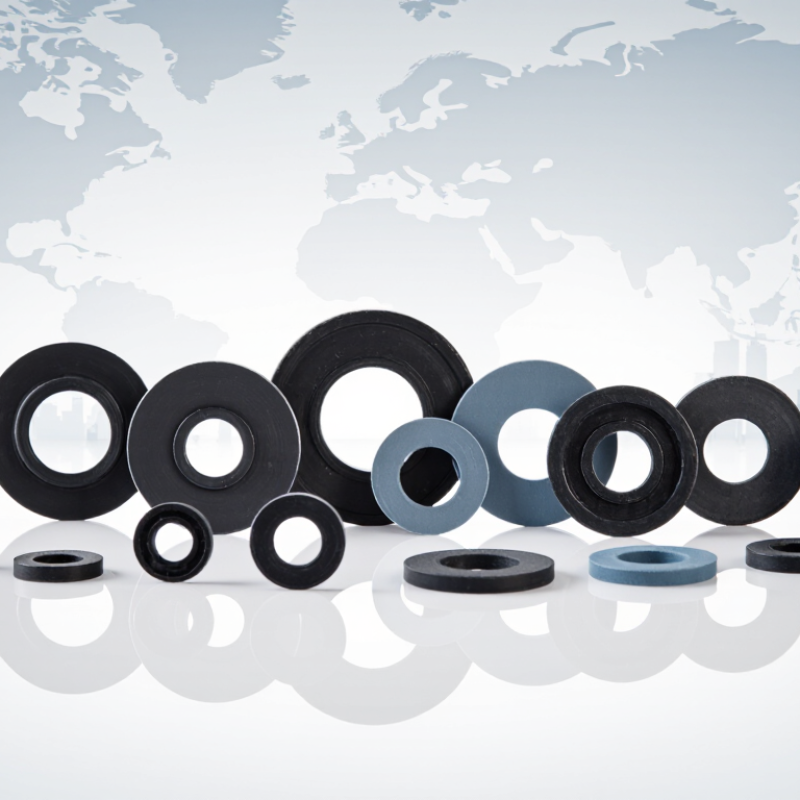
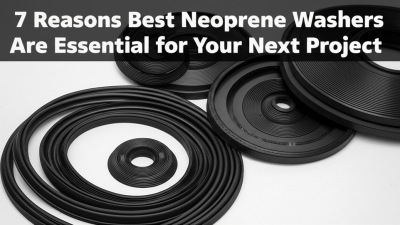
A neoprene washer is a flat ring made from chloroprene rubber, placed beneath a bolt head or nut. It spreads clamping force and helps seal against water, dust, and vibration. The material generally handles outdoor exposure and ozone better than many ordinary rubbers. It also tolerates some oils, but not every oil or chemical. Check the compound.
Typical uses include HVAC housings, pumps, plumbing fixtures, vehicle assemblies, and outdoor electrical enclosures. Picture a washer compressed beneath a metal fastener on a rain-exposed panel: it cushions the joint while limiting water entry. Too much compression, however, can deform the washer and weaken the seal. Small details matter.
The International Rubber Study Group’s 2024 World Rubber Industry Outlook projected global rubber demand at about 31.6 million tonnes for 2024. That figure covers rubber broadly, not neoprene washers specifically, but it reflects the scale of rubber use across industry. For washer selection, engineers can consult ASTM D2000 material classifications and request test data for hardness, temperature limits, and compression set. These values vary by formulation. A washer that works in a cool indoor cabinet may age faster beside a hot pump or under prolonged sunlight.
How to Evaluate Neoprene Washer Suppliers
Choosing a neoprene washer supplier starts with the conditions the part will face. Share the expected temperature range, exposure to oils or weather, and the washer’s compression load. Ask for material hardness, thickness tolerances, and compression-set data. These details help show whether a proposed washer fits the application, rather than merely matching a drawing.
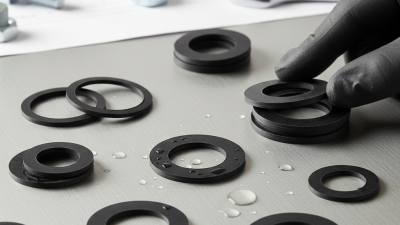
Details matter. Request samples from the intended production process, not just a handpicked prototype. Measure thickness at several points, then check fit and recovery after compression. A neat datasheet can still miss variation between batches. Test it in context. Ask how the supplier tracks raw materials, inspection results, and lot numbers. Review relevant test reports, but confirm what each test actually measures. A reported value is useful only when its method and conditions are clear.
Reliable communication is another practical signal. See whether the supplier answers technical questions precisely and flags limits, such as tooling constraints or longer lead times for custom sizes. Compare quoted tolerances, packaging, and delivery estimates alongside price. I would not treat the cheapest quote as the best choice; still, a higher price alone proves little. Request a written specification before approving production, and keep an approved sample for comparison.
Suggested scorecard weights, totaling 100%—not measured supplier or market data. Compare suppliers using documented evidence such as material specifications, inspection records, sample results, certifications, and delivery performance. Adjust the weighting to suit your application and purchasing priorities.
The ten supplier profiles represent different ways to source neoprene washers. One custom molder may handle unusual shapes, while a die-cut converter suits flat washers and repeat orders. Compression-molding specialists can serve thicker parts. Precision producers focus on consistent thickness and clean edges. Small runs matter.
Other profiles include multi-material rubber shops, rapid-prototyping workshops, and high-volume industrial manufacturers. An engineering-focused supplier may review drawings before production. Export-oriented producers can coordinate packaging and shipping, while distributors may offer stocked sizes for quicker dispatch. These are useful distinctions, not guarantees of performance. A polished catalog can still leave questions unanswered.
Tips:
Send a drawing with the inner diameter, outer diameter, thickness, and tolerance clearly marked. Ask for the neoprene grade, hardness range, sample parts, and inspection records. Compare quotes on the same specifications. Check how each supplier handles rejected samples and design changes. Details matter. Some buyers overlook lead times until production is already waiting.
Supplier capabilities matter more than catalog size when comparing neoprene washer suppliers. Check whether each supplier can control compound formulation, washer thickness, inner diameter, and edge quality. Grand View Research’s Synthetic Rubber Market Size report valued the global synthetic rubber market at USD 31.4 billion in 2023. That figure reflects a large material market, but it does not prove any supplier’s washer consistency. Ask for material traceability and inspection records tied to the production lot.
Compare suppliers on prototype speed, tooling ownership, minimum order quantities, and capacity for repeat orders. Request hardness and compression-set data for the proposed compound, then confirm test conditions match your application. A clear drawing review can catch a washer that is too thin for the available groove. Small details matter. Be cautious when a quote promises performance without identifying the material grade or test method; that gap deserves follow-up.
Tips: Send a dimensioned drawing and specify temperature, fluid exposure, and expected compression. Ask for a sample and its inspection report before approving production. If a supplier cannot explain how it controls thickness or compound changes, keep comparing. A low unit price may not offset inconsistent batches.
This is an anonymized buyer comparison framework, not a verified ranking of specific suppliers. The profiles describe common supplier types and capabilities; confirm all materials, tolerances, certifications, lead times, and compliance documents directly with each prospective supplier.
| No. | Anonymized Supplier Type | Typical Strength | Common Production Approach | Service to Compare | Buyer Checks |
|---|---|---|---|---|---|
| 1 | Industrial gasket converter | Cut washers and gasket shapes from sheet materials. | Die cutting, knife cutting, or waterjet cutting, depending on geometry and order requirements. | Ask about drawing review, prototype samples, and control of cut dimensions. | Confirm neoprene/CR grade, sheet thickness, tolerances, and edge quality. |
| 2 | Rubber molding specialist | Can assess molded designs or washer features that are difficult to cut from sheet. | Compression, transfer, or injection molding, subject to the part design and material compound. | Compare tooling ownership, mold charges, sampling, and production change control. | Request confirmation that the proposed process and compound meet the drawing and service conditions. |
| 3 | Rubber sheet stockist and converter | Combines material sourcing with conversion of sheet stock into washers. | Sheet selection followed by die cutting or another suitable cutting method. | Check stock availability, material traceability, and whether cutting is performed in-house. | Verify the compound designation and request material documentation for the supplied batch. |
| 4 | Custom sealing-products manufacturer | May support washers as part of a wider sealing-component program. | Process selected to suit the material, geometry, quantity, and specification. | Compare engineering support, design-for-manufacture feedback, and inspection reporting. | Clarify acceptance criteria, inspection method, and responsibility for specification changes. |
| 5 | High-volume die-cutting producer | A potential fit for repeat orders of relatively simple flat washers. | Die cutting from sheet or roll stock; tooling suitability depends on the washer design. | Ask about production capacity, reorder consistency, and tooling maintenance. | Compare total landed cost, scrap assumptions, packaging, and dimensional inspection plans. |
| 6 | Prototype and low-volume converter | May accommodate development samples and smaller order quantities. | Flexible cutting methods may be used where dedicated tooling is not economical. | Compare sample turnaround, revision handling, and transition plans for repeat production. | Confirm that sample material and process will match the intended production specification. |
| 7 | Precision rubber-parts supplier | May be suitable where tighter dimensional controls or detailed inspection are required. | Cutting or molding process selected against the drawing and agreed tolerances. | Request measurement methods, inspection records, and nonconformance procedures. | Agree tolerances explicitly; do not assume a supplier can meet unspecified precision requirements. |
| 8 | Export-focused component manufacturer | May have established processes for international packing and shipment coordination. | Cutting or molding capabilities vary; export experience does not establish product quality by itself. | Compare shipping terms, export documents, communication, and shipment tracking. | Confirm origin, packaging requirements, delivery terms, and responsibility for customs documentation. |
| 9 | Distributor with outsourced conversion | Can offer purchasing convenience and access to external manufacturing capacity. | Production is performed by one or more manufacturing partners. | Ask who controls production, quality records, material sourcing, and corrective actions. | Identify the actual manufacturing site and ensure subcontracting is disclosed and controlled. |
| 10 | Application-focused rubber supplier | May help select a rubber compound based on the washer’s operating environment. | Material and production route should be selected for the specified application. | Compare technical consultation and the supplier’s ability to document material recommendations. | Share exposure to temperature, fluids, weather, compression, and other relevant service conditions. |

For a like-for-like quotation, provide a drawing, quantity, material and thickness requirements, tolerance, intended operating conditions, packaging needs, destination, and any required compliance documents. Ask suppliers to identify the exact compound and manufacturing site in their quotation.
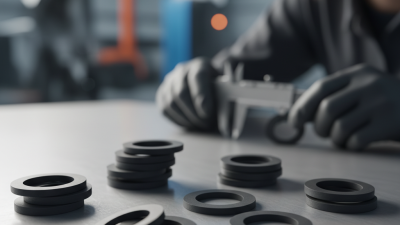
Selecting a neoprene washer supplier starts with service conditions, not a catalog photo. Record the inner diameter, outer diameter, thickness, hardness, and expected compression. Add operating temperature, exposure to oils or weather, and the mating surface. Small mismatches matter. Ask each supplier to confirm these details in writing and explain how tolerances are measured. Request a sample from the same production process proposed for repeat orders. Measure it with calipers, then check the fit under a realistic clamping load. One hand-fit test is useful, but it cannot predict years of compression set.
Review material data, inspection records, and traceability for incoming rubber batches. Check whether certificates identify the actual compound and test method, rather than offering generic claims. Ask how the supplier handles nonconforming parts, tooling changes, and lot identification. Responses should be specific. If possible, compare dimensions across several sample washers; variation can hide in a single perfect piece. Discuss minimum order quantities, lead times, packaging, and replacement procedures before approving production. Then place a small trial order and inspect it on arrival. That step costs time. Still, a smooth sales conversation is not evidence of consistent process control.