How to Choose the Right Black Self Tapping Screws
Choosing the right Black Self Tapping Screws requires more than matching a dark finish to a project. The screw must suit the material, load, thread design, and installation method. A screw that performs well in thin steel may fail in plastic or softwood. Small details matter.
Start by identifying the base material and its thickness. Steel panels often need sharp threads and a hardened point for reliable penetration. Softer materials may require a finer thread to reduce cracking and stripping. Check the screw’s diameter, length, head style, and drive type against the joint design. The screw should grip securely without piercing hidden wiring or damaging the opposite surface.
The black coating also deserves careful attention. Black oxide, phosphate, and painted finishes can offer different levels of corrosion resistance and surface durability. Indoor decorative work may need a different finish than outdoor equipment exposed to rain, salt, or condensation. A black appearance does not automatically indicate strong rust protection. That assumption causes avoidable failures.
Installation quality matters just as much. Use the recommended driver setting, maintain steady pressure, and avoid excessive torque. A pilot hole can improve results in dense materials, although its size should follow manufacturer guidance. Test one screw in a sample piece before full installation. No selection guide replaces a physical trial. Reliable choices come from product specifications, recognized testing, and practical observation. Some projects still involve uncertainty, especially when materials vary. That uncertainty should be recorded, tested, and reviewed rather than ignored.
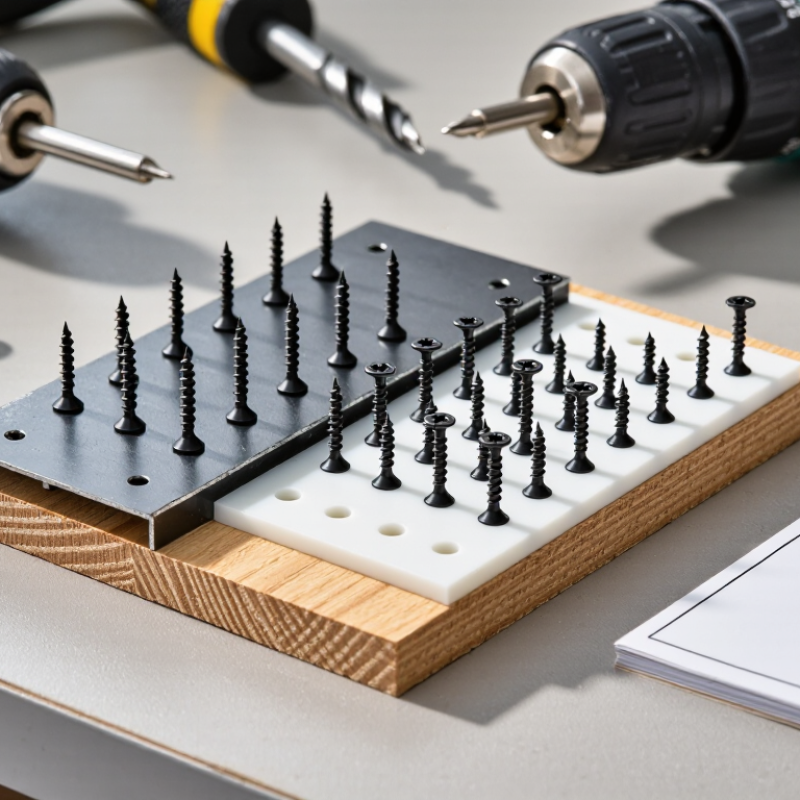
Understanding Black Self-Tapping Screws and Their Common Uses
How to Choose the Right Black Self-Tapping Screws
Black self-tapping screws create their own threads as they enter a prepared surface. Their dark finish often comes from black oxide or phosphate treatment. It improves appearance and can reduce friction during installation. However, black does not automatically mean rustproof. This detail is easy to miss.
These screws are commonly used for metal brackets, electrical enclosures, furniture hardware, and interior construction. For thin sheet metal, a sharp point and fine threads usually provide clean engagement. Coarse threads may work better in plastic or soft materials. Match the screw length carefully. Too short, and the connection may pull apart. Too long, and it can damage hidden components or leave a sharp point exposed.
I have found that material thickness matters more than color during selection. Check the screw’s steel grade, coating, head style, and drive type. A pan head suits many visible assemblies, while a countersunk head sits flush in a prepared surface. Use steady pressure and moderate torque. Excessive force can strip the drive or deform thin metal. For outdoor applications, verify corrosion resistance with the supplier’s technical data. A small test piece helps reveal poor thread engagement before full installation. I sometimes skip this step, and that is a mistake worth reconsidering. Clearance holes, pilot holes, and installation speed can also change the final holding strength.
Choosing Materials and Coatings for Strength and Corrosion Resistance
How to Choose the Right Black Self Tapping Screws
Choosing Materials and Coatings for Strength and Corrosion Resistance
When selecting black self-tapping screws, start with the base metal and the application. Hardened carbon steel provides strong threads for drilling into sheet metal, timber, and plastics. Stainless steel resists corrosion better, but it may gall during installation and offer lower hardness. Match screw hardness to the material being pierced. A small pilot hole can prevent cracking and excessive driving force.
The black coating matters as much as the steel. Black oxide offers an attractive finish and limited corrosion protection, especially in dry indoor environments. It usually needs oil or additional protection. Black phosphate improves paint adhesion and reduces friction, but it is not suitable for prolonged moisture exposure. Black zinc coatings generally provide better corrosion resistance. Organic or polymer coatings may perform better outdoors, but their thickness can change driving torque and thread fit.
Test the actual screw in the real material. Do not rely on appearance alone. A dark, smooth surface can hide poor coating coverage around the thread crest. Check the coating specification, hardness, and corrosion test results when available. In practical assembly work, I would also inspect screws after installation, especially near cut edges and washers. Those areas often corrode first. Rushed choices fail. I have sometimes chosen a stronger screw and created a weaker joint by overtightening it. Controlled torque, correct bit engagement, and a short installation trial reveal problems early.
Matching the Screw to the Base Material and Installation Method
Choosing black self-tapping screws starts with the base material, not the color.
Thin steel sheet usually needs a sharp-point screw with fine threads. Softer aluminum often benefits from wider threads and moderate driving torque. Plastic is less predictable. Excessive force can split it.
For thicker steel, a drill-point screw may reduce pilot-hole work. However, the drill point must match the material thickness. A short point may spin without cutting fully. A long point can damage hidden components. Installation method matters too. Use a controlled driver, keep it square, and stop when the head seats. Overdriving can strip threads or crush the surface.
Corrosion deserves attention.
NACE’s IMPACT study estimated global corrosion costs at about 2.5 trillion dollars annually, showing why coating selection matters. Black oxide mainly improves appearance and provides limited protection. It should not be treated as a universal outdoor coating. For humid or coastal locations, verify the coating, substrate, and test standard. ASTM C1513 can help when corrosion-resistant fasteners are required.
Tips: Test one screw first. Check thread engagement, holding strength, and surface damage. For critical joints, follow the project specification and record the driver setting. I still recheck pilot-hole size on unfamiliar materials. A screw that worked yesterday may fail in a different alloy, thickness, or temperature. No chart replaces a test hole.
Checking Fit, Performance, and Safety Before Final Selection
How to Choose the Right Black Self Tapping Screws
Checking Fit, Performance, and Safety Before Final Selection
Choosing black self-tapping screws requires more than matching their color to a panel. Check the screw diameter, thread design, length, and head style against the material. A screw for thin sheet metal may fail in hardwood or crack brittle plastic. Measure the material thickness, then allow enough thread engagement without letting the tip damage hidden components.
I usually test a few screws on scrap material first. This simple step reveals whether the threads bite cleanly or strip the surface. Check the pilot hole size when the material is hard or thick. Too small creates excessive resistance, while too large weakens the grip. Apply steady pressure with a suitable driver, and stop when the head sits flush. Over-tightening can distort the black coating and reduce holding strength.
Performance also depends on the environment. Inspect the coating for chips, uneven coverage, or exposed steel before installation. Moisture, salt, and outdoor exposure may require a more corrosion-resistant specification. I once selected a screw by appearance alone, and the threads were too short for reliable fastening. That mistake was avoidable. Wear eye protection, keep fingers clear of the driver, and verify that no wiring or plumbing lies behind the surface. If the assembly carries weight or vibration, test the joint under realistic conditions before final selection.