Why Choose Threaded Rivets for Your Next Project?
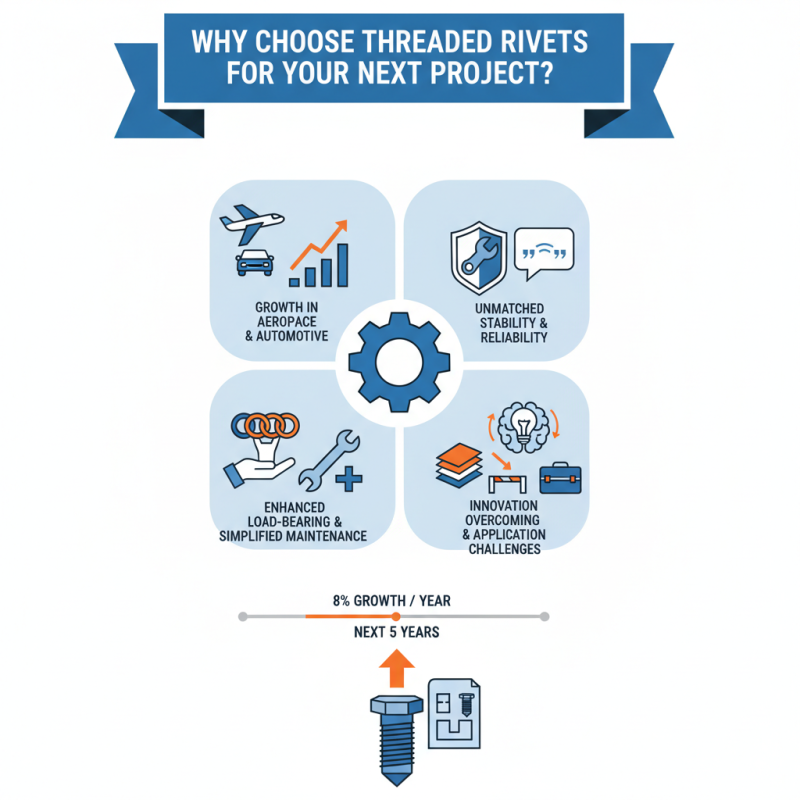
In the competitive landscape of manufacturing, the choice of fasteners can significantly impact the success of a project. Threaded Rivets have emerged as a leading option in various industries, including aerospace and automotive, due to their reliability and strength. According to a recent market report from Fastener World, the demand for Threaded Rivets has surged, with a projected growth rate of 8% per year over the next five years.
Industry expert Dr. Emily Chen emphasizes their importance, stating, "Threaded Rivets provide unmatched stability in assemblies, making them a go-to choice for engineers." This statement reflects a growing recognition among professionals of the value Threaded Rivets add to structural integrity. However, some projects still overlook this robust fastening solution, often due to misconceptions about installation processes.
While many manufacturers prefer traditional fastening methods, the advantages of Threaded Rivets cannot be understated. They offer enhanced load-bearing capabilities and simplify maintenance. Yet, challenges in sourcing the right materials or understanding proper application techniques can lead to shortcomings. To fully leverage the potential of Threaded Rivets, professionals must confront these hurdles and embrace this innovative fastening technology.
Benefits of Using Threaded Rivets in Engineering Applications
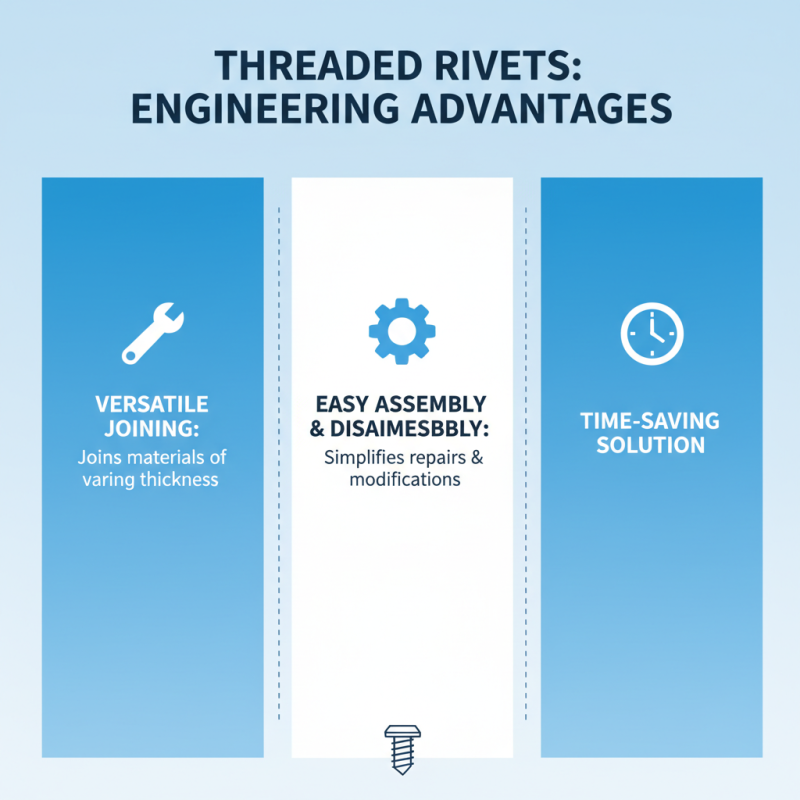
Threaded rivets offer unique advantages in engineering applications. These fasteners provide a great solution for joining materials with varying thicknesses. Unlike traditional rivets, threaded rivets allow for easy assembly and disassembly. This makes repairs and modifications simpler, saving time during projects.
In addition to versatility, threaded rivets enhance design flexibility. They can be used in a variety of materials, from metals to composites. Their strong holding power can withstand high tension and shear forces. However, improper installation can lead to failures. It's crucial to ensure that the rivets are correctly aligned and tightened.
Using threaded rivets can also reduce weight in designs. Lightweight structures are becoming more important, especially in aerospace and automotive industries. However, engineers must carefully calculate load-bearing capacities. A mistake in choice could lead to structural weaknesses. Balancing strength and weight requires thorough analysis and sometimes, trial and error.
Comparison of Threaded Rivets and Traditional Rivets
Threaded rivets stand out in comparison to traditional rivets for various reasons. According to a report from the Fastener Industry Coalition, threaded rivets can provide a more secure and robust joint. This comes from the ability to screw in fasteners tightly, ensuring stability across various applications. Traditional rivets may not offer this level of security, as they merely deform to hold materials together. This can lead to vulnerabilities under stress, especially in high-load applications.
Additionally, the installation process for threaded rivets often proves more efficient. A study by the Structural Fastening Association noted that threaded rivets can reduce assembly time by up to 30%. Traditional rivets require precise alignment, and if misaligned, the process becomes problematic. This can create frustration during assembly, leading to delays or additional costs. The challenge of effectively removing traditional rivets can also pose problems in maintenance and repair situations.
Cost, however, plays a crucial role in this discussion. While threaded rivets may seem more expensive upfront, their long-term benefits often outweigh initial costs. The increased durability and lower maintenance needs can save time and resources in the long run. Many projects may still rely on traditional rivets, yet they might miss out on the advantages offered by threaded rivets. It's worth reflecting on which rivet type aligns best with project requirements.
Applications Where Threaded Rivets Excel
Threaded rivets are gaining popularity in various engineering projects. Their unique design allows for a stronger grip, making them ideal for demanding applications. One area where threaded rivets excel is in automotive assembly. This sector often requires high-strength connections that can endure vibrations and heavy loads. In such cases, the robustness of threaded rivets stands out.
Another application is in aerospace manufacturing. Here, every component must meet strict safety standards. Threaded rivets can provide the necessary reliability and strength needed for aircraft structures. Their resistance to fatigue can be a game changer in maintaining aircraft integrity over time. In construction, threaded rivets also perform well. They can secure heavy panels or frameworks, ensuring stability throughout the building's lifetime.
However, not every project may benefit from them. The installation process can be more complicated compared to regular rivets. Some users may face time-consuming adjustments before achieving the right fit. It's essential to consider the specific requirements of each project. Threaded rivets can offer remarkable strength, but they may also require more careful planning and execution.
Installation Process for Threaded Rivets Explained
The installation process for threaded rivets is straightforward but requires attention to detail. Begin by preparing the materials. Ensure the surfaces are clean and free of debris. This step is crucial. According to a study by the American Institute of Steel Construction, a clean surface can improve the bond strength by up to 40%.
Next, drill the appropriate holes for your rivet size. Make sure the hole diameter aligns with the rivet specifications. A miscalculated hole can lead to weak joints, causing failures under stress. It's wise to use a drill bit designed for metal to achieve the best results.
Tips: Always use a calibrated torque wrench when installing threaded rivets. This ensures you apply the correct amount of force. Over-tightening can damage the material. Additionally, consider using a lubricant on the rivet threads. This can enhance the ease of installation and prevent thread stripping. Reflecting on past projects may uncover simple yet effective adjustments to your technique. Taking the time to refine your approach will lead to superior results.
Cost-Effectiveness of Threaded Rivets in Manufacturing Projects
Threaded rivets are gaining popularity in manufacturing projects. Their cost-effectiveness is notable. A recent industry report indicates that threaded rivets reduce assembly time by up to 30%. This speed translates into lower labor costs, making them an attractive option for manufacturers.
Cost is not just about purchase price. The longevity of threaded rivets adds value. They are durable and resistant to fatigue. According to studies, they can last 50% longer than traditional fasteners in high-stress applications. Less frequent replacements mean lower material costs over time.
However, not all projects may benefit equally. Some may find the initial investment too high. Additionally, skilled labor is required for proper installation. This can offset savings if not managed well. Therefore, it's crucial to evaluate the specific needs of each project when considering threaded rivets.
Why Choose Threaded Rivets for Your Next Project? - Cost-Effectiveness of Threaded Rivets in Manufacturing Projects
| Attribute |
Standard Rivets |
Threaded Rivets |
| Material Cost (per unit) |
$0.05 |
$0.07 |
| Installation Time (seconds) |
10 |
8 |
| Pull-Out Strength (lbs) |
150 |
200 |
| Weight (grams) |
2.0 |
2.5 |
| Corrosion Resistance |
Low |
High |
| Typical Applications |
Light assembly |
Heavy machinery |