Top 5 Tips for Choosing the Best Weld Nuts for Your Projects?
Choosing the right Weld Nuts is crucial for ensuring strong, durable connections in various manufacturing projects. According to a 2023 report by the Manufacturing Fasteners Association, over 45% of assembly failures relate to improper fastener selection. Weld Nuts, specialized components designed for welding onto metal surfaces, require careful consideration of material, design, and compatibility with the welding process. John Mitchell, a leading expert in fastening technologies, emphasizes, “Selecting the proper Weld Nuts directly impacts the structural integrity and lifecycle of your assembly.” This highlights the importance of informed decision-making backed by industry insights.
Despite the technical data available, many project managers still overlook critical factors such as weldability and load requirements. This sometimes leads to unexpected issues like weak weld joints or corrosion problems after installation. Understanding these finer points separates reliable assemblies from costly reworks. Industry trends show an increased demand for high-strength, corrosion-resistant Weld Nuts, particularly in automotive and aerospace sectors. Thus, it’s not just about picking any Weld Nut but matching the right type to specific project needs.
While expert advice guides initial choices, on-the-ground testing and adjustments often reveal limitations not covered in manuals. This calls for continuous evaluation of Weld Nuts performance in real-world conditions. Crafting an effective selection strategy involves balancing technical specs with practical experience to avoid pitfalls. As you explore these top tips, keep in mind the evolving nature of welding technology and its impact on fastener selection quality.
Understanding Weld Nuts: Types and Applications in Various Industries
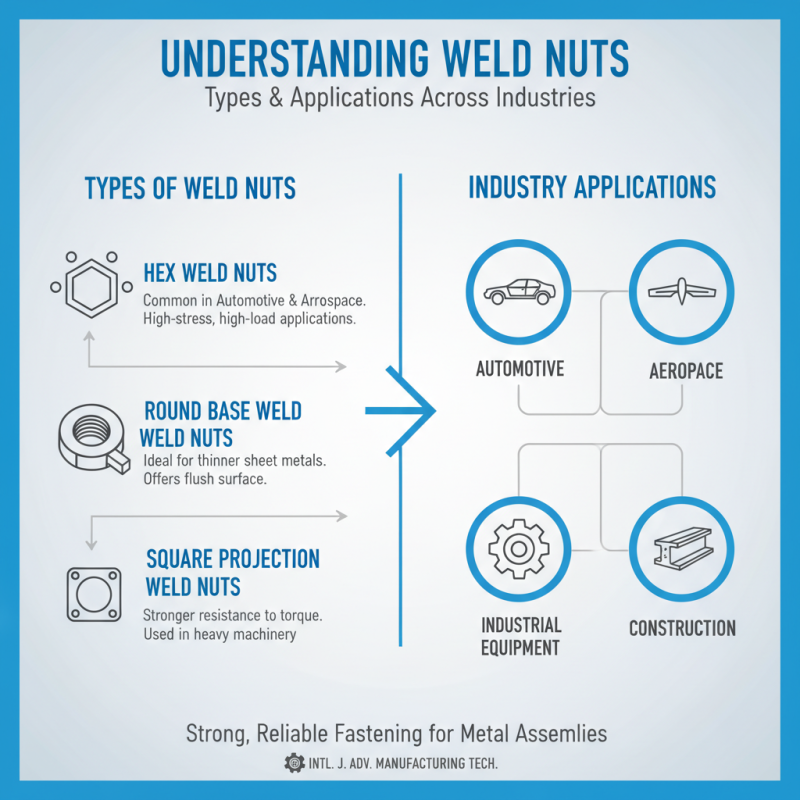
Weld nuts are crucial components in various industrial applications. They provide a strong, reliable fastening method for metal assemblies. Understanding the different types of weld nuts is essential for engineers and manufacturers. For instance, hex weld nuts are widely used in automotive and aerospace sectors. They offer excellent load-bearing capacity. Research from the International Journal of Advanced Manufacturing Technology highlights their efficiency in high-stress environments.
In the construction industry, weld nuts are essential for creating stable frameworks. They save time and reduce the risk of mechanical failure. A study by the American Society of Mechanical Engineers (ASME) shows that using quality weld nuts can increase assembly speed by up to 30%. However, the choice of weld nuts should depend on the specific materials and loads involved. Not all applications require the same type of weld nut. It demands a thoughtful selection process to avoid potential issues.
Weld nuts also come in various styles, such as knurled and flanged. Each type serves different purposes. For example, knurled weld nuts provide a solid grip, reducing slippage during assembly. The manufacturing standards for weld nuts can vary significantly. Therefore, relying on precise specifications and guidelines is essential. Misunderstanding these details can lead to performance issues down the line. The welding process itself also requires careful consideration, ensuring proper heat levels to maintain integrity.
Key Specifications to Evaluate When Choosing Weld Nuts for Projects
Choosing the right weld nuts involves careful evaluation of key specifications. First, consider the material. Common options include steel and stainless steel. Each material has unique properties that affect strength and corrosion resistance. Think about the environment where the weld nuts will be used. This choice influences their longevity and performance.
Next, assess the design of the weld nuts. Features like knurling or serrations may enhance grip during welding. The shape impacts how well the nut fits into the intended application. It's not uncommon to overlook these details, but they play a significant role in the overall effectiveness of the project.
Finally, think about the size and thread specifications. The right dimensions ensure a secure fit. If the weld nut is too large or too small, it can compromise the connection. Many times, projects suffer due to miscalculations in size. Taking the time to measure accurately can save headaches later. Evaluate all these aspects thoroughly for a successful outcome.
Material Considerations: Selecting the Right Alloy for Weld Nuts
When selecting the right alloy for weld nuts, consider the application and environment. Different materials offer unique properties, such as corrosion resistance and strength. Stainless steel is a popular choice. It provides excellent durability in harsh conditions. Carbon steel is another option. It offers high strength at a lower cost, but it may rust without proper coating.
Aluminum alloys are lightweight and resistant to oxidation, suitable for projects where weight is a concern. However, they may not be as strong as steel. Be mindful of the heat affected zone when welding. This can alter the properties of your chosen alloy, leading to potential failure. Testing welds with samples can help identify weak points before full production.
Don't overlook the importance of compatibility between the material and the base metal. Mismatched alloys can lead to poor weld quality. It’s essential to evaluate your project's specific need. Choose the material that balances strength, cost, and environmental factors. This step may require some trial and error. Reflect on past projects for insights.
Top 5 Tips for Choosing the Best Weld Nuts for Your Projects
Weld Nut Standards: Compliance with Industry Certifications and Regulations
When selecting weld nuts for your projects, compliance with industry certifications and regulations is crucial. Weld nuts must meet specific standards to ensure reliability and safety. Look for certifications such as ISO or ASTM. These indicate that the product has been tested and meets strict quality requirements.
Consider the application when choosing weld nuts. Different projects may require different specifications. For instance, if your project involves high-stress applications, look for weld nuts designed to withstand greater loads. This choice can significantly affect the integrity of your work.
Remember to verify the material of the weld nuts. Materials like stainless steel or carbon steel are preferred in many applications. Each has its advantages, including corrosion resistance and strength.
Additionally, reviewing the manufacturer's specifications can provide insights into the product's suitability for your project. Don't overlook this aspect. Comparing options can be valuable. It helps ensure you make an informed decision, enhancing the overall success of your project.
Cost-Effectiveness: Analyzing Budget and Quality Balance in Weld Nuts
When selecting weld nuts, cost-effectiveness is crucial. A tight budget often drives decisions, but quality shouldn't be compromised. Moderate prices can sometimes signal acceptable quality. However, be cautious. Not every low-cost option delivers performance. This balance is vital for project success.
Quality weld nuts offer durability and strength. Low-cost materials can lead to premature failure in critical applications. Evaluate the cost per unit against the functional life of the weld nuts. It’s often wise to buy in bulk if you know a trusted supplier. Relying on personal experience or peer recommendations can guide your choices.
Consider your specific application. The environment may impact the longevity of weld nuts. For example, exposure to moisture or high temperatures can affect performance. Investing a little more upfront might save costs down the road. Examine certification standards. Although they may add to initial costs, they ensure reliable performance. Navigating this decision requires careful consideration and research.
Top 5 Tips for Choosing the Best Weld Nuts for Your Projects
| Tip Number |
Tip |
Cost-Effectiveness |
Quality Consideration |
| 1 |
Assess Your Project Needs |
Align budgeting with project size |
Choose nuts that meet specifications |
| 2 |
Material Selection |
Consider cost of different materials |
Invest in durable materials |
| 3 |
Evaluate Supplier Reputation |
Balance price against supplier reliability |
Choose suppliers with quality assurance |
| 4 |
Check for Certification |
Ensure compliance with budget limits |
Select certified products for assurance |
| 5 |
Calculate Total Cost of Ownership |
Include maintenance and replacement costs |
Consider long-term value over initial price |