Best Aluminum Rivets for Your Next Project?
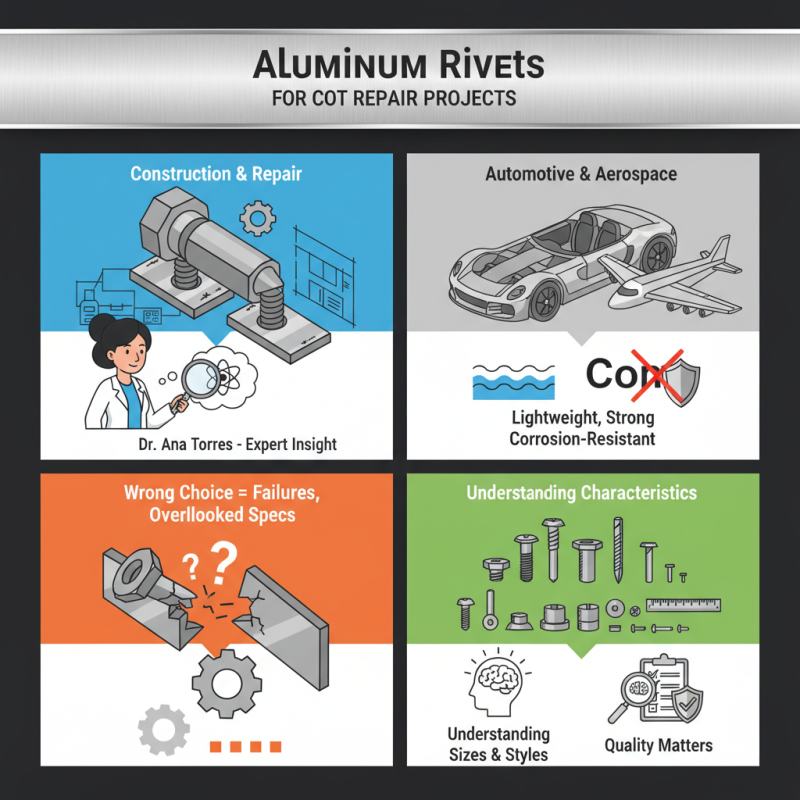
When it comes to construction and repair projects, choosing the right materials is crucial. Aluminum rivets serve as a versatile choice for various applications. According to industry expert, Dr. Ana Torres, “The right aluminum rivets can make a significant difference in the integrity of your work.” This emphasizes the importance of selecting high-quality options.
Aluminum rivets are lightweight yet strong. They are frequently used in automotive and aerospace industries. Their corrosion resistance adds to their appeal. However, not all aluminum rivets are created equal. The wrong choice can lead to failures. Users often overlook the specifications, which can result in unforeseen issues down the line.
Understanding the characteristics of aluminum rivets is necessary for effective usage. They come in different sizes and styles for specific needs. A poor selection may lead to structural weaknesses. Investing time in research can save headaches later. Always remember, quality matters in aluminum rivets.
Types of Aluminum Rivets and Their Applications
Aluminum rivets come in various types, each suited for different applications.
Solid rivets are a common choice for structural purposes.
They offer high strength and rigidity. Typically made from 2024-T3 aluminum alloy, these rivets are ideal for aerospace applications.
According to industry reports, their tensile strength can exceed 70,000 psi when properly installed.
[Image of Blind Rivets]
Blind rivets are another popular option. They are often used when access to both sides of the material is difficult.
With a pull mandrel system, these rivets allow for quick installations.
Their versatility makes them suitable for automotive and construction projects as well.
However, users must be cautious about their load-bearing capacity, as it can sometimes fall short for heavy-duty applications.
Lastly, there are semi-tubular rivets.
These rivets feature a partial hole at the end, reducing weight. They are mainly used for light-duty applications.
While they provide ease of installation, they may require closer evaluation before use in structural contexts.
Each type of aluminum rivet has its merits and limitations, making it crucial to assess project needs carefully.
Factors to Consider When Choosing Aluminum Rivets
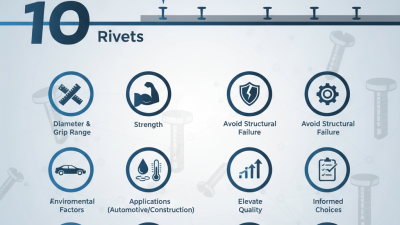
When choosing aluminum rivets for your next project, consider the specifications. The diameter matters. A larger rivet holds more securely. Think about the thickness of your materials. If the rivet is too short, it won’t grip well. That could lead to failures down the road.
Look at the strength rating. Aluminum rivets come in various grades. Higher grades often have better strength and durability. However, they may be more expensive. Is saving money worth a potential risk? Evaluate your needs carefully. Check if corrosion resistance is necessary for your project. Some environments can weaken weaker materials over time.
Don't forget about the installation process. Some rivets need special tools. Will you have access to them? Time and effort may be a concern. If you make the wrong choice, it could cause delays. Pay attention to your project's requirements. Inadequate preparation can lead to complications later. Take your time when making decisions.
Top Brands and Products for Aluminum Rivets
When choosing aluminum rivets for your project, it's essential to consider top products that deliver durability and performance. These rivets come in various sizes, typically ranging from 1/8 inch to 1/4 inch in diameter. Selecting the right size can impact the strength of your assembly. Many users report that the popular choices often blend ease of use with strength.
It's interesting to note that while some rivets are designed for specific applications, other options cater to a broader range of needs. For instance, solid rivets often offer a tight hold, while blind rivets are perfect for hard-to-reach areas. However, some rivets fail to hold as users expect. This inconsistency can lead to frustration during large projects. Testing different types might be necessary to find what truly works best for your unique application.
Additionally, considering material quality and construction is vital. Some rivets are crafted from heat-treated aluminum, ensuring enhanced corrosion resistance. However, not all options deliver the promised strength. Some users have experienced flexibility issues, leading to structural concerns. Researching user reviews can help guide your choices in finding the right aluminum rivets for your next endeavor.
Installation Techniques for Aluminum Rivets
When it comes to installing aluminum rivets, choosing the right technique is crucial for ensuring durability and strength. Proper alignment of the rivet is key. Misaligned rivets can lead to weaker joints and potential failure. According to a study by the Aerospace Industries Association, alignment issues have been noted in over 30% of failed rivet installations. A careful setup can help avoid this significant problem.
Drilling the correct hole size is another vital step. A hole that is too large can lead to insufficient grip, while one that is too small may damage the rivet during insertion. The American Society for Testing and Materials indicates that using a drill bit that matches the manufacturer's specifications can improve the overall integrity of the installation. Pay attention to the thickness of the materials as well. Using appropriate backing techniques can further enhance the strength of the joint.
Proper tooling is also essential. It is important to use a rivet gun that is compatible with aluminum rivets. Some tools may not provide uniform pressure, leading to inconsistent results. In their 2022 report, the Engineering Tool Institute highlighted that using outdated equipment can affect up to 20% of installations. Careful consideration of these factors can save time and ensure the success of your project.