7 Tips for Buying Hook And Eye Latch?
Choosing a Hook And Eye Latch looks simple until a loose hook, sharp edge, or weak stitch causes failure. The fastener must match the fabric, load, movement, and washing conditions. A tiny brass hook on a silk bodice needs different protection than a steel latch on a canvas bag.
Industry data supports taking this small component seriously. Grand View Research places the global door hardware market in the multibillion-dollar range, with demand influenced by renovation, construction, and replacement projects. Although a Hook And Eye Latch is smaller than a door fitting, the same buying principles apply: material quality, corrosion resistance, dimensional consistency, and dependable operation. The Freedonia Group’s hardware research also highlights replacement demand and product durability as important purchasing factors. These trends matter for manufacturers, retailers, and home sewers.
A practical buying decision should begin with the application, not the appearance. Check the base metal, coating, hook profile, eye strength, hole spacing, and package consistency. Stainless steel may suit humid environments, while plated steel can offer a lower-cost option for indoor garments. Test several pieces before ordering in bulk. Good suppliers should provide clear specifications, samples, and traceable quality information.
No checklist is perfect. Real use exposes weaknesses.
The seven tips in this guide focus on fit, finish, strength, corrosion protection, installation, supplier reliability, and total cost. They also encourage a final hands-on test, because product photographs cannot reveal rough edges or a hook that bends under light pressure.
Understanding Hook and Eye Latch Types and Common Uses
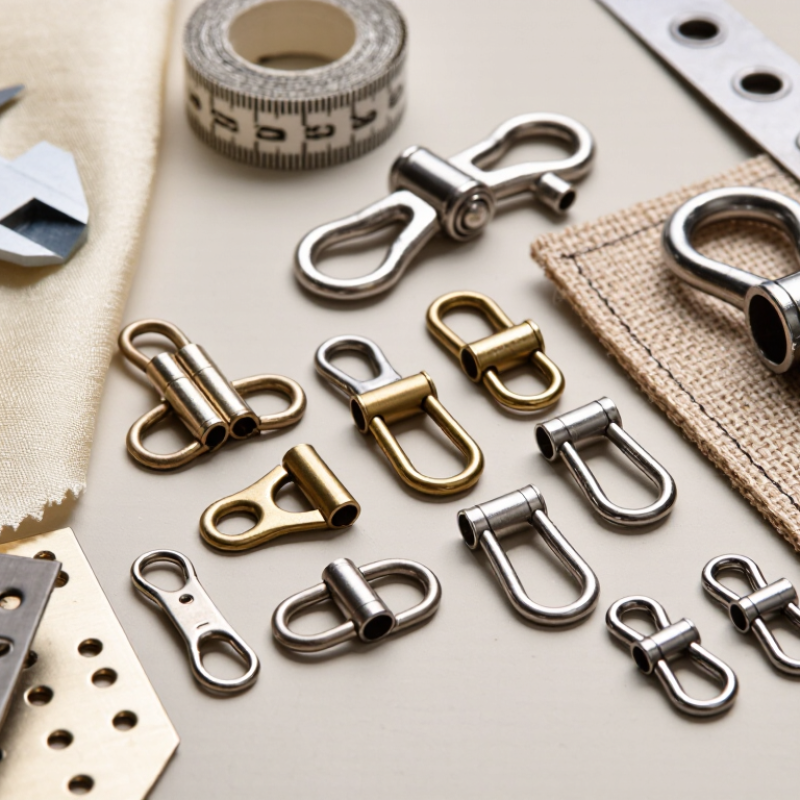
Hook and eye latches appear simple, but their types serve different everyday purposes. Sew-on hooks suit dresses, skirts, cuffs, and lightweight curtains. They sit close to fabric and leave a neat, almost invisible finish. Screw-on latches provide firmer holding power for cabinets, gates, storage boxes, and furniture panels. Decorative versions can add detail to upholstery or traditional-style clothing. Choose the type according to movement, weight, and access frequency.
Material matters. Stainless steel resists moisture, while brass offers a warmer appearance and smooth operation. Plated steel may reduce cost, but scratched plating can expose weaker metal. Check the hook shape, eye depth, and base thickness before buying. A narrow eye may release under vibration. A shallow base may pull away from soft wood. Measure the mounting area carefully. A latch that looks suitable online may feel oversized beside a small cabinet door.
Installation also affects reliability. Sew-on models need strong thread and evenly spaced stitches. Screw-on models need pilot holes, suitable screws, and a firm surface. Test the latch several times after installation. It should close without force but remain secure when lightly pulled. I once chose a polished latch for a humid room; the appearance was excellent, but the finish needed more care than expected. Consider the environment, cleaning routine, expected load, and daily handling before choosing. Small hardware deserves careful checking.
7 Tips for Buying Hook And Eye Latch? - Understanding Hook and Eye Latch Types and Common Uses
| Buying Tip |
Latch Type |
Typical Materials |
Common Uses |
Key Selection Consideration |
| 1. Match the latch to the application |
Basic hook and eye |
Steel, stainless steel, brass, or zinc-plated steel |
Cabinet doors, gates, shutters, screens, and light-duty doors |
Confirm whether the hardware is intended for indoor, outdoor, decorative, or functional use. |
| 2. Check the required holding strength |
Heavy-duty hook and eye |
Thicker steel or stainless steel |
Large gates, shed doors, barn doors, and utility enclosures |
Choose a larger, thicker assembly when the door is heavy or exposed to wind and vibration. Do not use it as a certified safety restraint unless rated for that purpose. |
| 3. Select the right installation style |
Screw-mounted hook and eye |
Steel, brass, stainless steel, or coated metal |
Wooden doors, windows, furniture, cabinets, and wall-mounted fixtures |
Use screws suited to the substrate. Pilot holes and wall anchors may be needed for hardwood, masonry, or hollow surfaces. |
| 4. Consider the operating angle |
Straight hook and eye |
Steel, stainless steel, or brass |
Doors or gates that open and close along a predictable, direct path |
Measure the distance between mounting points and make sure the hook can enter the eye without bending or binding. |
| 5. Choose a suitable configuration |
Double hook and eye |
Steel, stainless steel, or brass |
Wider gates, paired doors, shutters, and applications requiring engagement from two directions |
Verify that both hooks align correctly and that the mounting surfaces provide enough clearance for operation. |
| 6. Evaluate corrosion resistance |
Outdoor or marine-grade hook and eye |
Stainless steel, galvanized steel, or weather-resistant coated metal |
Garden gates, exterior shutters, coastal installations, and humid areas |
Stainless steel generally offers strong corrosion resistance; galvanized or coated finishes can be practical for many outdoor uses. |
| 7. Confirm dimensions and finish |
Decorative hook and eye |
Brass, steel, iron, or finished metal alloys |
Interior doors, furniture, period-style shutters, and visible architectural hardware |
Compare overall length, mounting-hole spacing, hook diameter, projection, and finish with the existing hardware and surrounding design. |
Note: Actual load capacity depends on the hardware size, material, fasteners, mounting surface, installation quality, and direction of force. Always follow the supplier’s published specifications for safety-critical applications.
Checking Materials, Strength, Size, and Weight Capacity
Buying a hook and eye latch starts with the material.
Choose stainless steel for damp rooms, outdoor gates, or coastal air. Plain steel can work indoors, but it may rust faster. Look closely at the finish. Bubbles, sharp edges, and uneven plating suggest weak quality.
Tip one: match the material to the environment.
Tip two: inspect the surface and welds.
Strength matters when the latch holds a moving door, cabinet, or gate.
Check the hook thickness, eye shape, and mounting plate. A heavier latch is not automatically stronger.
Tip three: review the manufacturer’s load rating.
Tip four: leave a safety margin above the real load. Never treat the rating as an invitation to overload it.
In my workshop experience, vibration can loosen small screws surprisingly quickly. I once chose a latch by appearance alone. That was a poor decision.
Measure the gap before ordering.
Tip five: confirm the latch length, eye opening, plate width, and screw-hole spacing. A few millimeters can prevent proper alignment.
Tip six: compare the latch size with the door’s weight and movement. Large doors may need multiple latches or a stronger model.
Tip seven: check weight capacity under realistic conditions, including impact and repeated use. Test the fit gently after installation. The door should close smoothly, without forcing the hook. Recheck the screws after several days. That small step is easy to overlook.
Matching the Latch Design to Your Door, Gate, or Furniture
7 Tips for Buying Hook And Eye Latch
Matching the latch design to your door, gate, or furniture prevents small hardware from becoming a daily problem. Measure the material thickness, frame clearance, and hook travel before shopping. A lightweight brass latch may suit a cabinet, but a steel gate needs stronger construction and secure fixing points. I have misjudged this before. A latch can look substantial, yet flex when the gate shifts.
For exterior doors and gates, inspect corrosion resistance, screw quality, and drainage around the fitting. Coastal air and frequent rain demand more than attractive plating. The Joint Center for Housing Studies’ 2024 LIRA report projected homeowner improvement spending to approach 485 billion dollars in 2024. That scale reflects continued renovation activity, but it also highlights a common risk: hardware is often selected late. Choose the latch after checking the door’s movement, not only its appearance.
Furniture requires a different approach. Look for compact hooks, smooth edges, and a finish that will not mark painted wood. The 2023 U.S. Houzz & Home Study reported that many renovating homeowners continued investing in kitchens and other interior spaces. Small fittings therefore affect both function and visual consistency. Match the latch finish to nearby handles, but do not sacrifice alignment. Leave enough clearance for easy operation. A perfect visual match is not always a practical match. Check the manufacturer’s load guidance, installation instructions, and relevant hardware standards before fitting. If the door sags later, even a well-made latch may need adjustment.
Evaluating Installation Requirements, Safety, and Durability
Buying a hook and eye latch starts with the door, gate, or cabinet itself. Measure the gap, mounting surface, and swing direction before choosing hardware. A latch may look strong, yet thin wood can split around its screws. Check whether the surface is timber, metal, masonry, or composite. Each material needs suitable fasteners and pilot holes. I have seen small alignment errors create rubbing, rattling, and premature wear. Leave enough clearance for paint, seasonal movement, and dirt.
Installation safety deserves more attention than appearance.
The eye should sit squarely with the hook, not at an angle that forces the gate closed. Use all fixing points when possible, and choose screws with enough depth for the substrate. For a child-accessible area, avoid sharp projections and check whether small fingers could reach the gap. A latch is not automatically a security device. It should not replace a properly designed lock where controlled access matters. After installation, pull the gate firmly and inspect every screw.
Durability & Maintenance
Durability depends on environment and maintenance. Outdoor fittings face rain, salt air, dust, and repeated impact, so compare corrosion resistance, material thickness, and finish quality. Open and close the latch several times before final tightening. This exposes poor alignment early. Lubrication can help, but too much oil collects grit. Check the fasteners after a week, then during seasonal inspections. My own mistake was trusting a heavy-looking latch on a flexible gate. The latch survived; the gate did not. Choose the complete installation, not the isolated piece.
Comparing Prices, Brands, Reviews, and Long-Term Value
When buying a hook and eye latch, compare more than the sticker price. A low-cost latch may use thin steel, uneven plating, or a weak eyelet. I check the metal thickness, screw-hole alignment, surface finish, and closing tension by hand. Grand View Research estimates that the global architectural hardware market will grow steadily through 2030, reflecting stronger demand for durable fittings. However, market growth does not guarantee quality. Compare prices within the same material and size category. Stainless steel usually costs more than plated steel, but it may resist rust better in kitchens, bathrooms, and coastal areas.
Reviews can reveal details that product pages hide. PowerReviews reported in 2023 that 98% of surveyed consumers considered reviews essential for purchase decisions. Read recent reviews carefully. Look for comments about loose screws, sharp edges, poor alignment, and repeated use. Five stars are not enough. Brand comparison should focus on published dimensions, material grades, load guidance, warranty terms, and replacement support, not familiar names. A clear specification sheet often signals better manufacturing discipline. ASTM salt-spray testing can help assess corrosion resistance, but test results do not perfectly predict outdoor performance. That part deserves caution.
Long-term value includes installation time and maintenance. A latch that needs constant tightening is not economical. I once chose a cheaper fitting and replaced it within a year; the saving was imaginary. Still, paying more is not always wise. Check whether the latch matches the door thickness and operating frequency. Small details matter. A secure fit, replaceable screws, and consistent movement usually matter more than polished packaging.
7 Tips for Buying Hook and Eye Latch: Price, Reviews, and Long-Term Value
This comparison uses common latch materials and product formats. Stainless steel and heavy-duty options cost more initially, but their higher corrosion resistance and expected service life can provide better long-term value than basic plated steel.